
The best glute exercises for women should do more than make your legs burn. They should help you train the right muscles, move with control, and feel like your glutes are working instead of your thighs or lower back.
Many women start glute training for more shape, strength, balance, or confidence in how their body feels and moves. But stronger glutes can also support better posture and make everyday movement feel easier. That includes walking and climbing stairs, hiking, or getting through a long day of sitting or standing.
That is why we asked Lili, one of our affordable online personal trainers at Happy Trainers, to share the glute exercises she often recommends to clients. Below, you’ll find 6 coach-recommended glute exercises, each with a video demo, form tips, and common mistakes to avoid.
Your Glute Exercise Cheat Sheet
Before you start, use this table as a quick reference to see what each of these glute exercises for women is designed to do and which ones may fit your goals best.
| Best For | Main Glute Focus | Sets & Reps | |
| Seated Hip Abduction | Targeting the side glutes | Gluteus medius & minimus | 2–3 sets of 15–25 reps |
| Improving hip stability | |||
| Bulgarian Split Squat | Building single-leg strength | Gluteus maximus & medius | 3–4 sets of 8–12 reps per side |
| Improving glute control | |||
| Step-Up | Training glute strength | Gluteus maximus & medius | 3–4 sets of 8–10 reps per side |
| Improving balance & control | |||
| Single-Leg Sliding Hip Thrust | Building control | Gluteus maximus | 2–3 sets of 8–12 reps per side |
| Helping each side work independently | |||
| Great if one side feels weaker | |||
| Back Extension | Practicing hip extension | Gluteus maximus | 2–3 sets of 10–15 reps |
| Building a strong glute contraction | |||
| Lying Frog Pump | Creating a focused glute burn | Gluteus maximus & minimus | 2–3 sets of 20–30 reps |
| Minimal joint stress |
Can you do all of these exercises in one workout? You can, but more exercises doesn’t always mean better results. A good glute workout routine for women usually works best with 3 to 4 exercises per session. Lili has also shared a simple plan to guide you.
Should I warm up before these glute exercises?
Yes. A short warm-up with bodyweight squats, hip circles, or glute bridges can help you feel ready to train. Lili also includes rest and recovery days in her plan, which is explained later in the article, so your body can recover between sessions.
How many sets and reps should I do?
It depends on your level, recovery, and any injuries or limitations you may have. Lili’s sample plan below shows one simple way to organize these exercises without overdoing it.
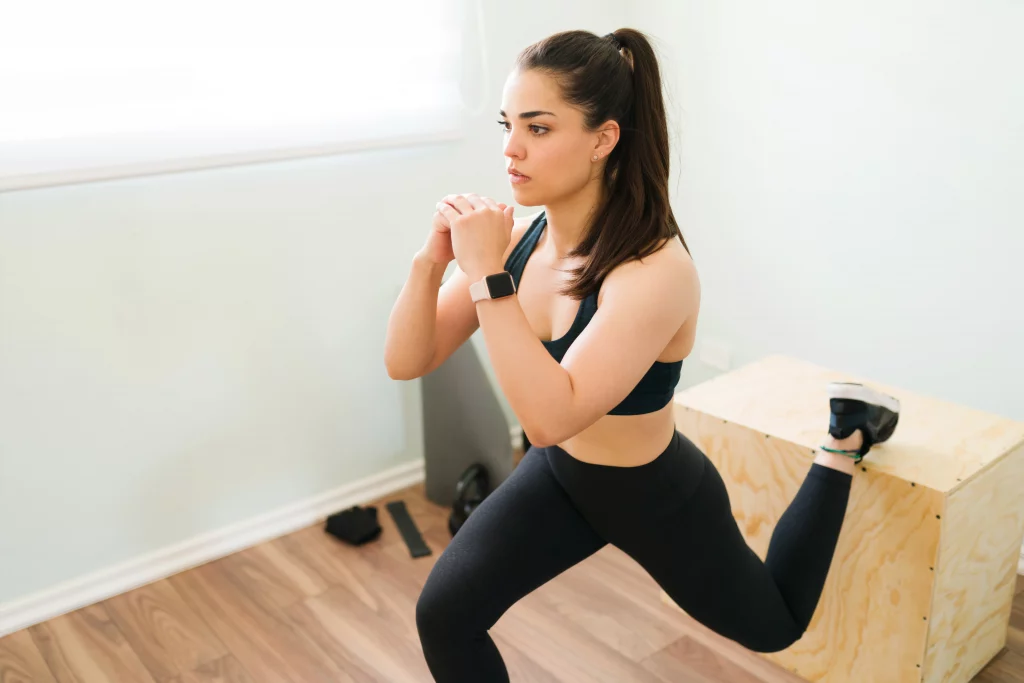
Glute Exercises for Women That Target the Right Muscles
There are a lot of glute exercises out there, and you’ve probably tried a few yourself without feeling much difference. That’s why Lili, one of the budget-friendly online fitness coaches at Happy Trainers, helped us put this list together.
These glute exercises for women each include a video demo and simple form tips, so you know what to fix and how to get more out of every rep. And if an exercise doesn’t feel quite right for your current level, don’t worry. At the end of this list, you’ll also find simple ways to make each movement easier or more challenging.
1. Seated Hip Abduction Machine
Sit with your lower back supported against the pad and your feet flat on the footrests to help keep your pelvis stable. Push the pads outward in a smooth, controlled motion, pause for one count at the widest point, then slowly resist the weight as your legs come back in.
Why Lili Includes It:
- Helps train an area that many common exercises do not fully challenge
- Often used as a warm-up before heavier lifts or as a finisher for extra side-glute work
- Places less stress on the lower back, making it easy to include in a long-term routine
Where You Should Feel the Tension
- Mostly in the outer part of your glutes
- It’s normal to feel your side glutes working hard and starting to burn
- You should not feel most of the work in the front of your thighs
Common mistakes to avoid and what to do instead:
- Leaning back too much → Sit tall and avoid using your torso to move the weight
- Letting the machine pull your legs back → Bring your legs back slowly and stay in control
- Swinging your legs instead of using your glutes → Think about leading the movement from your glutes instead of trying to move the weight faster.
Training at home?
Try seated banded hip abductions with a mini band above your knees. They can be a simple option for glute exercises for women at home when you do not have access to this machine.
2. Bulgarian Split Squat
In Lili’s glute workouts for women, she prefers a forward-lean setup because it puts the glute in a deeper stretch. It also helps reduce how much the quads take over the movement.
Stand two to three feet in front of a bench, with one foot resting behind you. If it feels comfortable, slightly elevate your front heel. Lean forward a little, lower with control, then drive through your front heel and midfoot to come back up. Start with body weight, then add dumbbells at your sides once it feels stable.
Why Lili Includes It:
- Builds glute strength without putting unnecessary pressure on the lower back
- Works well as one of the main strength exercises in a glute-focused program
Where You Should Feel the Tension
- Mainly in the glute of your front leg
- It’s normal to feel some work in the front thigh, too
- Your lower back should not be doing most of the work
Common mistakes to avoid and what to do instead:
- Staying too upright → Lean slightly forward to shift more tension into your glutes
- Letting your front heel lift → Keep your heel and midfoot planted throughout the movement
- Arching your lower back → Look slightly down and forward, and keep your ribs controlled
- Going too low before you can maintain good form → Use a shorter range of motion until the movement feels stable
Training at home?
You can use a sturdy couch, ottoman, or the edge of a bed instead of a bench. Just make sure the surface is stable and won’t slide or move while you’re exercising.
3. Step-Up
Stand in front of a sturdy box, bench, or step. One thing Lili emphasized was using a step high enough to create a meaningful range of motion without losing balance. Lean forward a little, drive through the heel of your front foot, and step up without pushing off the back leg. Lower yourself and repeat on the same side before switching legs.
You can start with body weight while you learn the movement. If you’re ready to take your glute workouts to the next level, add dumbbells at your sides for an extra challenge.
Why Lili Includes It:
- One of the main strength exercises she uses to build the glutes through a longer range of motion
- Many women do step-ups in a way that takes away what makes the exercise so effective
Where You Should Feel the Tension
- Mainly in the glute of the front leg
- Some work in the front thigh is normal
- A little core engagement is normal for balance
- Your back leg shouldn’t be doing most of the work
Common mistakes to avoid and what to do instead:
- Turning the movement into more of a lunge by pushing off with the back leg → Keep the back foot light and let the front leg do most of the work
- Choosing a box that is too low → Use a height that lets your front glute work through a deeper range
- Letting your front knee cave inward → Keep your knee in line with your toes
- Losing control on the way down → Lower yourself with control instead of dropping back to the floor
Training at home?
Use a sturdy step, low bench, ottoman, or solid box. Make sure it won’t slide, wobble, or tip over while you’re stepping up.
4. Single-Leg Sliding Hip Thrust
Start by lying on your back on a mat. Keep one foot planted on the floor and extend the other leg straight out. Press through the planted heel to lift your hips until your body forms a straight line from your shoulders to your working knee. Pause for one second, squeeze your glutes, then lower with control.
A slider can make the movement smoother, but a sock on a smooth surface works just as well. This can be one of the best glute exercises for women because the sliding setup makes form breakdown easier to spot.
Why Lili Includes It:
- Helps each glute work independently, so the stronger side cannot take over as easily
- Often used as a finisher to build better symmetry and fix side-to-side imbalances
Where You Should Feel the Tension
- Mainly in the glute of the working leg
- A little core engagement is normal
Common mistakes to avoid and what to do instead:
- Arching your lower back to lift higher → Keep your torso steady and stop once your hips are fully extended
- Letting your working knee collapse inward → Keep your knee in line with your foot
- Losing the squeeze at the top → Pause for one second before lowering
5. Back Extension
For this exercise, Lili suggests turning your toes slightly out and bringing your heels closer together so it becomes a more effective part of glute workouts for women.
Start on a 45-degree back extension machine with your feet secured and the pad sitting just below your hips. Keep your back neutral and lower your upper body until you feel a stretch in your glutes. As you rise, exhale, squeeze your glutes, and gently push your hips forward.
Why Lili Includes It:
- Useful for sessions focused on upper-glute development
- Small setup changes can completely change which muscles do most of the work
Where You Should Feel the Tension
- Mainly in your glutes, especially as you lift yourself back up
- Some stretch in your hamstrings is normal
- A little work in your lower back is expected, but it should not take over
Common mistakes to avoid and what to do instead:
- Arching your lower back to lift higher → Squeeze your glutes at the top instead of leaning farther back
- Rounding your shoulders as you lower → Keep your back neutral and move from your hips
- Using momentum to swing up → Let your glutes drive the movement
Training at home?
Back extensions aren’t easy to recreate without the right equipment. If your goal is to keep the focus on your glutes, glute bridges or hip thrusts are usually a closer fit. Romanian deadlifts can also work, although they tend to involve the hamstrings more.
6. Lying Frog Pump
Lie on your back on a mat. Bring the soles of your feet together and let your knees open out to the sides. Lift your hips by squeezing your glutes, then lower back down with control. Lying frog pumps also fit easily into a glute workout routine for women since they require very little space and no equipment.
Why Lili Includes It:
- Often used as a high-rep finisher at the end of a session
- Helps you focus on a strong glute squeeze without putting much stress on your lower back or knees
Where You Should Feel the Tension
- Mostly in your glutes
- A strong burn at the top of the movement is normal
- Your lower back should not be doing most of the work
- You may feel a little inner-thigh stretch
Common mistakes to avoid and what to do instead:
- Lifting your hips too high → Keep the range smaller and focus on squeezing your glutes
- Arching your lower back → Keep your torso steady and lift only your hips
- Letting your knees close in → Keep your knees relaxed and open to the sides
- Rushing through the reps → Slow down and pause briefly at the top
How to Make These Glute Exercises Easier or Harder
You do not need to start with the hardest version of these glute exercises for women. Use this table to adjust each movement based on your strength, balance, experience, and confidence with the exercise.
| Exercise | Make It Easier | Make It Harder |
| Seated Hip Abduction | 1. Use a lighter weight | 1. Add a 2-second hold at the widest point |
| 2. Reduce the range of motion | 2. Slow down the return phase to 3 – 4 seconds before adding more weight | |
| Bulgarian Split Squat | 1. Skip the heel elevation | 1. Hold heavier dumbbells |
| 2. Use a shorter range | 2. Pause for 1 second at the bottom | |
| 3. Start with body weight | 3. Use a deeper range of motion | |
| Step-Up | 1. Use a lower step | 1. Hold heavier dumbbells |
| 2. Place one hand on a wall for balance | 2. Use a slightly higher step | |
| 3. Add a knee drive at the top | ||
| Single-Leg Sliding Hip Thrust | 1. Start with a regular glute bridge | 1. Hold a dumbbell across your hips |
| 2. Use a smaller slide range | 2. Use a longer slide range | |
| 3. Pause longer at the top | ||
| Back Extension | 1. Use body weight only2. Use a shorter range of motion | 1. Hold a plate at your chest2. Hold the weight behind your head (advanced) |
| Lying Frog Pump | 1. Use a smaller range | 1. Add a dumbbell |
| 2. Skip the pause at the top | 2. Hold the squeeze for 2 seconds | |
| 3. Try single-leg frog pumps |
Making an exercise harder does not always mean adding more weight. In a good glute workout routine for women, you can also slow the movement down, pause at the hardest point, or use a slightly larger range of motion.
For Bulgarian split squats, only elevate your front foot if you can stay balanced and keep good form. For step-ups, a knee drive means bringing your back knee up at the top before stepping back down.

Meet the Coach Behind These Glute Exercises
Choosing glute exercises that match your goal matters, but choosing movements you can do safely even more. At Happy Trainers, we provide affordable online fitness trainers who make coaching clear, practical, and easier to access. For this guide, Lili stood out because her coaching style matches that approach.
Why Lili’s Coaching Approach Fits This Guide
Lili has vast experience in strength training, gymnastics, and TRX coaching. She focuses on helping clients improve movement quality and build strength through practical, personalized coaching.
Based on the client feedback on Lili’s profile, she stands out for:
- Explaining movements in a way that feels easy to follow
- Adjusting workouts to each client’s level, goals, and limitations
- Balancing challenge with steady, realistic progress
- Bringing positive energy that helps clients stay consistent
How Lili Would Turn These Exercises Into a Simple Glute Workout
You do not have to fit every glute exercise into one session. Lili’s approach is more balanced. She would usually spread glute-focused work across the week, while also making room for upper body training, lighter technique work, cardio, and full recovery.
Here is a simple example of how she might structure a glute workout routine for women:
| Day | Focus | Main Work | Why It Matters |
| Day 1 | Upper Body Pull + Core | Pull movements for the back and biceps, plus core work | Pre-activation for heavier training days |
| Day 2 | Upper Body Push + Core | Push movements for the chest, shoulders, and triceps, plus core work | Pre-activation for heavier training days |
| Day 3 | Full Body Light + Glutes | Moderate full-body exercises with glute technique work | Technique and activation session |
| Day 4 | Lower Body + Glutes | Hip-focused movements for the glutes and hamstrings | Main heavy glute session |
| Day 5 | Lower Body + Glutes | Side-glute, quad, and stability-focused movements | Stability, control, and shaping |
| Day 6 | Cardio + Glute Finishers | Intervals with high-rep glute finishers with light dumbbells | Fat burn and endurance |
| Day 7 | Full Rest and Recovery | No training, with a focus on sleep, nutrient-dense meals, massage, or restorative yoga | Recovery and adaptation between sessions |
This is not meant to be a strict plan for everyone, but it shows how Lili thinks about building glute workouts without overloading the body.
This structured plan can often answer many questions on its own, but if you want personalized feedback, Lili is available for one-on-one live coaching. You can start with a free consultation to ask questions and see if her coaching style feels like the right fit before committing to anything.
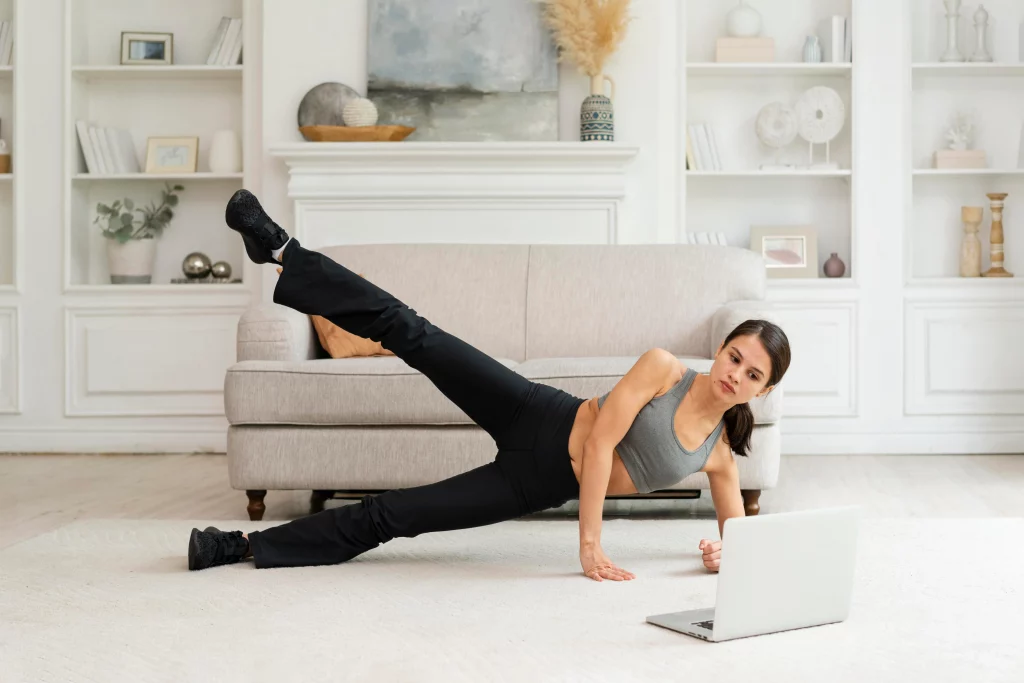
Why Some Glute Exercises Work Better Than Others
By now, you’ve probably noticed that not all glute exercises feel the same. Your height, hip mobility, setup, and form can all change where you feel the movement.
That is one reason variety matters in a good glute workout routine for women. Different movements challenge your glutes in different ways. For example, research published in Frontiers suggests that hip thrusts can be a useful glute-focused option, while squats may involve more thigh muscle growth.
How Glute Training Differs From General Lower-Body Training
Many lower-body exercises train several muscle groups at once. A squat, lunge, or leg press can all help build strength, but they are not always designed to make your glutes the main focus. That is one reason glute training for women often looks different from a traditional leg workout.
It is completely possible to finish a hard leg day with tired quads or sore hamstrings, while your glutes never received as much attention as you think. That is why glute workouts for women often put more emphasis on exercise selection and technique.
If you are starting to feel your glutes working more clearly, that is already a useful sign. The next step is learning how to progress those same movements instead of constantly adding new exercises. But how do you know whether that progress is leading to actual muscle growth? Understanding how to gain muscle in women can help answer that question.
Final Thoughts
The best glute exercises for women are not always the trendiest ones. They are the movements you can do with control, recover from, and keep improving over time.
Lili’s main advice is simple: long-term glute growth comes from consistency, not a fancy program. A good glute workout routine for women does not need to be complicated. Choose a few exercises you enjoy, increase the challenge gradually, and give your body enough rest so the muscle has time to grow.
From here, your next step depends on where you are:
- If you are making progress, keep going and focus on better reps.
- If you feel stuck, dealing with discomfort, or unsure how to turn these exercises into a plan, personalized feedback may help more than adding another movement.
Sometimes the missing piece is a trained eye. If you’re not sure whether your form, exercise choices, or weekly routine is holding you back, working with an online fitness trainer like Lili can help you see things more clearly.
If you haven’t checked her profile yet, you can take a quick look at Lili’s profile to learn more about her coaching style and consultation options.
Sources
- The impact of resistance training on gluteus maximus hypertrophy – Frontiers in Physiology
- Community Insights: Lower-back involvement during hip thrusts – Reddit
Expert Contribution
