

Ever wonder why some people build a fuller chest while others struggle, no matter how many push-ups they do? The secret often comes down to chest isolation exercises. These targeted moves are one of the most effective ways to build a defined and balanced upper body. Your chest muscles, the pectorals, are among the largest in your body and play a key role in moving your arms.
Everyday actions like washing your hair, opening a door, or pushing yourself up from the floor depend on chest strength. While lean legs and a strong core often get most of the attention in fitness programs, a complete routine also needs focused chest work.
Movements such as dumbbell flyes, cable flyes, and the butterfly machine are the best chest isolation exercises. They let your pecs handle the work without putting too much load on assisting muscles. In the next sections, we will look at how these exercises function and why they matter for your progress.
Isolation Exercises
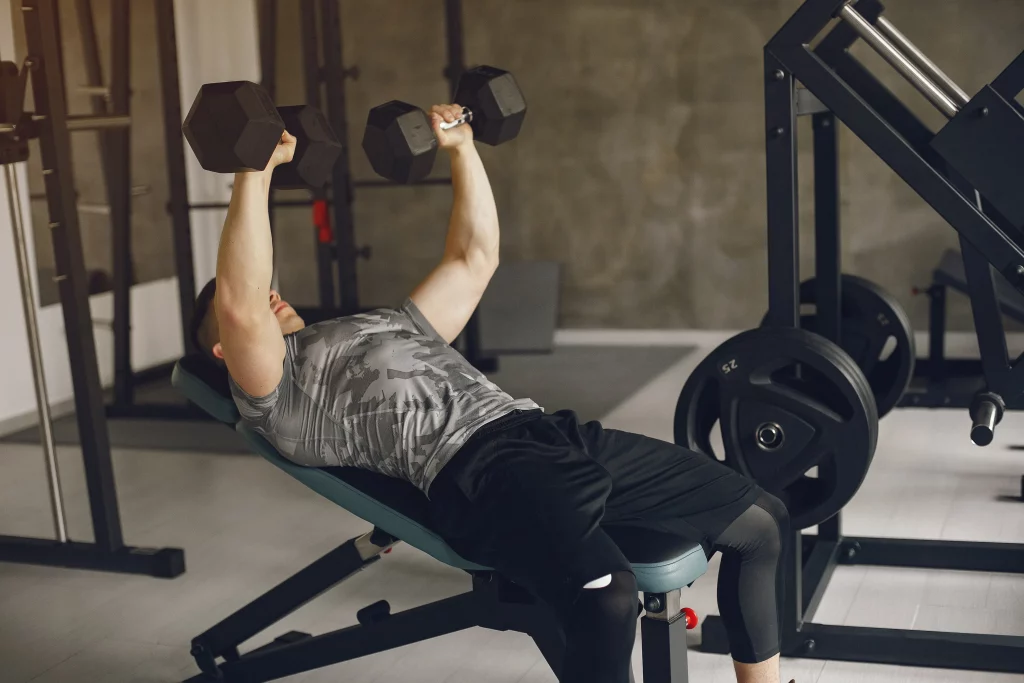
Exercises that isolate only one joint and a few muscles are known as isolation exercises. This is in contrast to compound exercises, which target more than one joint and muscle group. For example, a dumbbell fly is an isolation exercise, while a bench press is a compound movement.
Are Isolation Exercises More Important than Compound Exercises?
We take issue with the notion that chest isolation exercises have no place in a legitimate workout. Here are some reasons why isolation exercises are essential to your fitness.
Isolation exercises target a single muscle group and can be very effective for correcting imbalances or focusing on weak areas. Compound exercises, on the other hand, build overall strength by engaging multiple muscles at once. Both are important for a balanced chest isolation workout. By combining the best chest isolation exercises with compound lifts, you can prevent muscle imbalances and reduce the risk of injury. For example, if your quadriceps become much stronger than your hamstrings, it can lead to pulls or tightness, which is not what we want.
If you want to learn more about the difference, check out our full guide on compound vs isolation exercises.
Benefits of Isolation Exercises
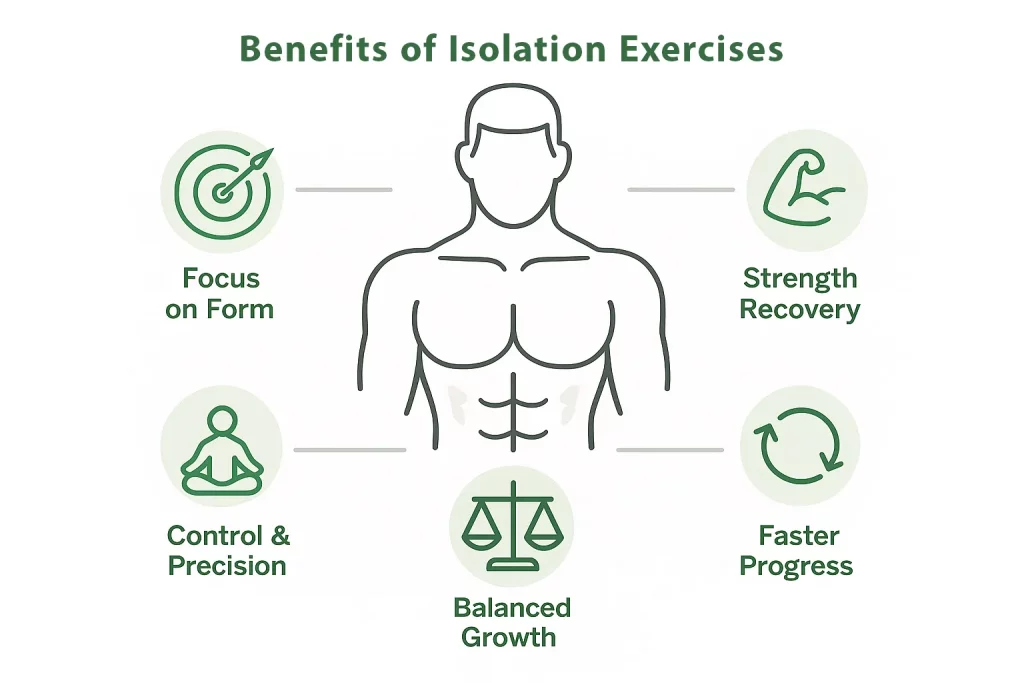
You can do isolation exercises to improve recovery and tone muscles. Combining isolation exercises with compound weight lifting is a wonderful complement. It’s important to isolate muscles on both sides of the body. In other words, if your workout routine includes bicep curls on your right side, you need to make sure you do them on your left side as well.
Every workout program should include isolation chest exercises. The benefits of compound movements extend to multiple muscle groups, whereas the best chest isolation exercises target only one area. By giving one muscle group the spotlight, isolation exercises let you bring up lagging areas and keep your body developing in a more balanced way.
If you want to refine your form and get professional feedback while training, our online strength training coaches can help you design a personalized isolation workout that fits your goals.
In an age when there are so many ways to exercise, it’s essential to go back to the basics once in a while. Exercises that isolate one muscle group at a time are some of the most fundamental activities because they allow you to give them your full attention and focus. Today, we’ll explore the benefits of isolated exercises.
1· Focus on Form
Isolation exercises let you give full attention to one muscle group, which makes it easier to move through the complete range of motion and refine proper form. In many compound lifts, form can get sloppy because other muscles step in to help.
With chest isolation workouts, that distraction is removed. You can clearly notice where adjustments are needed and avoid overcompensating with shoulders or triceps. Watching training videos or working with online strength training coaches makes these corrections even more effective.
2· Aim for a Specific Muscle Group
When you want to build a specific muscle group, a solid isolation exercise can be your best friend. For example, chest isolation exercises like dumbbell flyes let you target the pecs more directly than compound lifts.
Fitness experts also highlight that isolation work is the best way to bring up weak points that compound exercises might miss. According to Men’s Health, when one area of the chest isn’t developing as fast as the others, isolation exercises allow you to place almost all the tension on that exact spot.
Using a focused chest isolation workout also makes it easier to bring up weak areas, since the movement is designed to keep most of the tension on the chest itself rather than spreading it across other muscles.
3· Correct Muscle Imbalances Following Injury
It is common to use isolation exercises during physical therapy to help people regain strength in weaker areas of the body. For example, the muscles in your wrist and arm can become more vulnerable if you wear a cast for several weeks. By focusing on strengthening the weaker side with simple isolation movements, you can bring it back in line with the rest of your body.
Health experts also point out that isolation training is often a key tool in rehabilitation after injury. According to GoodRx, these single-joint exercises allow you to strengthen the weaker muscle without placing extra stress on other areas, making them ideal for recovery programs.
The same principle applies to chest training. If one side of your chest feels weaker after an injury, using the best chest isolation exercises, such as dumbbell flyes or the butterfly machine, can help restore balance and prevent further strain.
4· Restore Harmony and Balance to the Body
You will feel great when all of your muscles are in balance with each other. Our bodies are all different, so this balance will not look the same for everyone. It is essential to understand how your body works each day and set clear fitness goals to design the right routine.
The same applies to chest training. Adding upper chest isolation exercises can help correct weak points and create better symmetry across your physique.
5· Reduce the Time Between Workouts
To reduce downtime between workout sessions, you can use the rotation method for isolation exercises. After working your muscles to their limit, you must rest and recover before training the same muscle again. The healthiest and safest way to become fit is to listen to your body.
By rotating which muscles you work each day, you reduce the chance of overtraining and injury. The same principle applies to chest training. Planning an isolated chest workout on one day and focusing on other muscle groups the next allows your pecs to recover properly while keeping you consistent with your schedule.
Now, let’s move on to some of the most effective chest isolation exercises you can add to your routine.
List of Chest Isolation Exercises
In addition to fly variations, there are many ways to isolate the chest directly. Here is a list of isolated chest exercises you can include in your routine.
Dumbbell Fly Variations
- Flat Dumbbell Flyes
- Incline Dumbbell Flyes
- Decline Dumbbell Flyes
Cable Fly and Crossover Variations
- Cable Crossovers
- Low Cable Crossover
- Incline Cable Flyes
- Decline Cable Flyes
- Flat Bench Cable Flyes
- Single-Arm Cable Crossover
- Cable Iron Cross
Machine-Based Isolation
- Butterfly Machine (Pec Deck)
Bodyweight Option
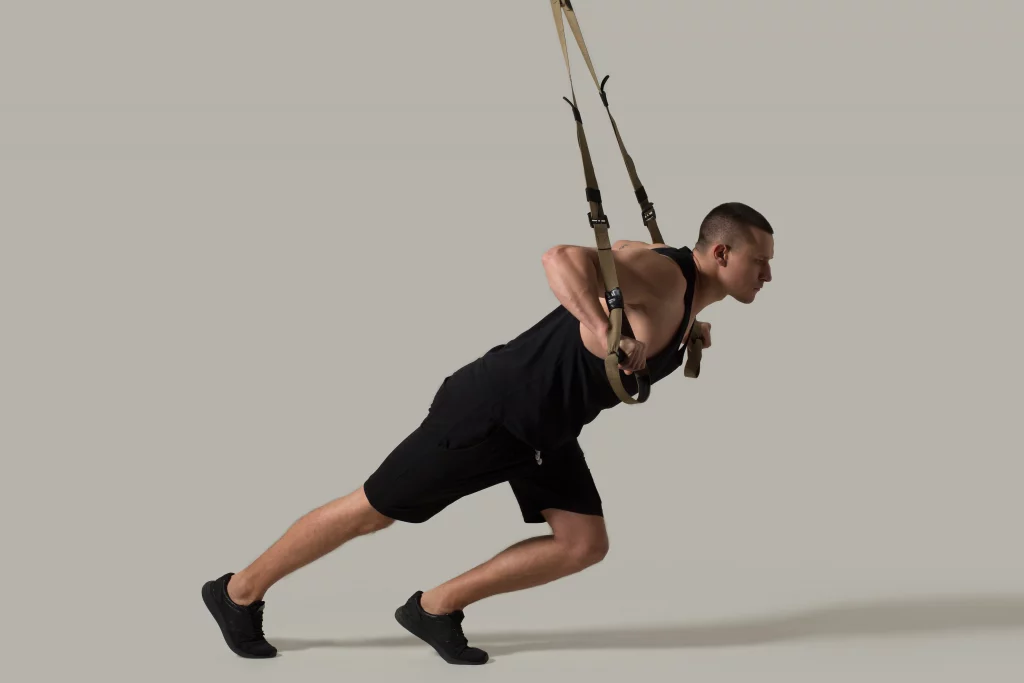
- Bodyweight Flyes (with suspension straps or floor variation)
9 Best Chest Isolation Exercises
From ancient Greek and Roman times forward, a well-defined chest has been regarded as a classic physical ideal. Strong pectorals have long symbolized power and confidence. Today, with the help of the best chest isolation workout, it is easier than ever to shape the chest through targeted exercises that place the focus directly on the pecs. Let’s take a look at the best chest isolation exercises.
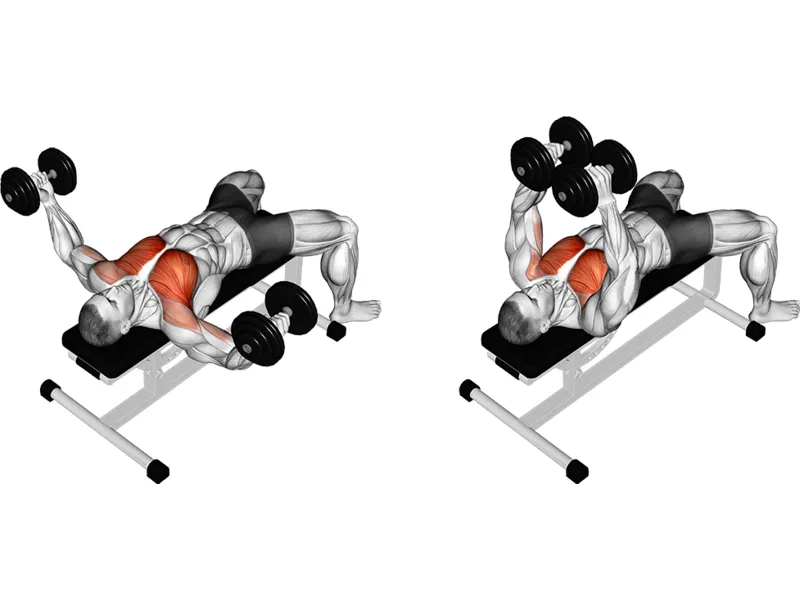
1. Flat Dumbbell Flye
Targeted Muscles: middle pecs
How To:
- Lie flat on a bench with your feet on the ground for stability.
- Hold a dumbbell in each hand with your arms extended above your chest and elbows slightly bent.
- Slowly lower the dumbbells out to your sides in a wide arc until your elbows are level with your chest.
- Pause briefly at the bottom of the movement.
- Squeeze your chest muscles to bring the weights back together over your chest.
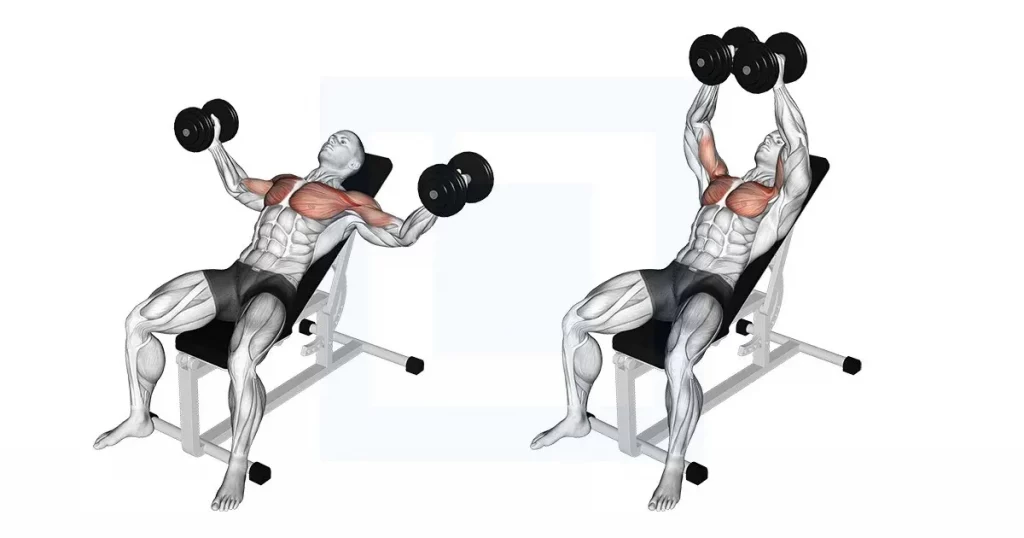
2. Incline Dumbbell Flye
Targeted Muscles: upper pecs
How To:
- Put your feet flat on the floor and set the bench to a 30–45 degree incline.
- Hold a dumbbell in each hand, bend your elbows slightly, and extend your arms above your chest.
- Keep the slight bend in your elbows as you lower the dumbbells in a wide arc to your sides.
- Stop the motion when your elbows are level with your shoulders.
- Squeeze your chest to bring the weights back together above your chest.
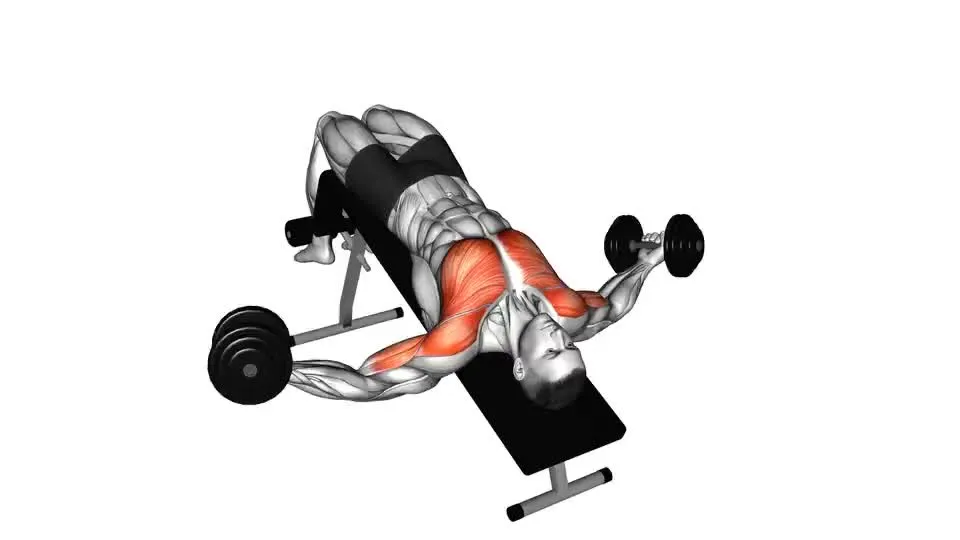
3. Decline Dumbbell Flye
Targeted Muscles: lower pecs
How To:
- Lie on a decline bench with your feet secured under the pads for support.
- Hold a dumbbell in each hand above your chest with your elbows slightly bent.
- Slowly lower the dumbbells in a wide arc down and outward until you feel a stretch in your lower chest.
- Keep the slight bend in your elbows throughout the movement.
- Squeeze your pecs to bring the dumbbells back together above your chest.
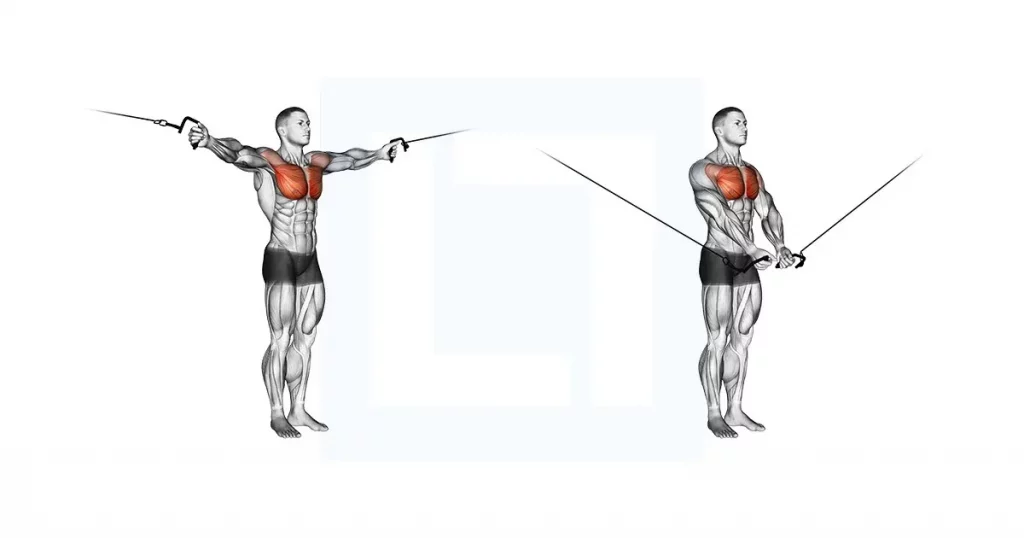
4. Cable Crossover
Targeted Muscles: inner pecs, lower pecs
How To:
- Stand in the center of a cable-crossing station with your feet staggered, knees bent, and your focus forward.
- Grasp the D-handles attached to the upper pulleys.
- Keep your palms facing down and arms slightly bent, maintaining this bend throughout the movement.
- Flex your pecs to draw the handles together and down, meeting below your waist.
- Let the handles return slowly to the starting position after a short peak contraction.
- Avoid touching the weight stacks while performing reps.
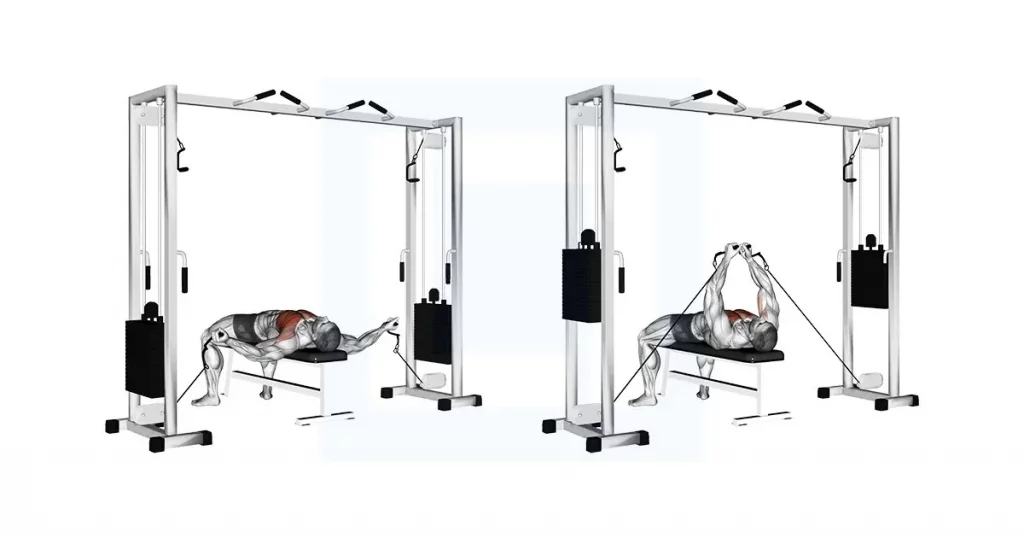
5. Flat Bench Cable Flye
Targeted Muscles: middle pecs.
How To:
- Place a flat bench in the center of a cable station and attach D-handles to the low pulleys.
- Lie back on the bench and hold one handle in each hand with your arms extended above your chest and elbows slightly bent.
- Slowly lower the cables out to your sides in a wide arc until your elbows are level with your chest.
- Keep the slight bend in your elbows throughout the motion.
- Squeeze your pecs to bring the handles back together over your chest.
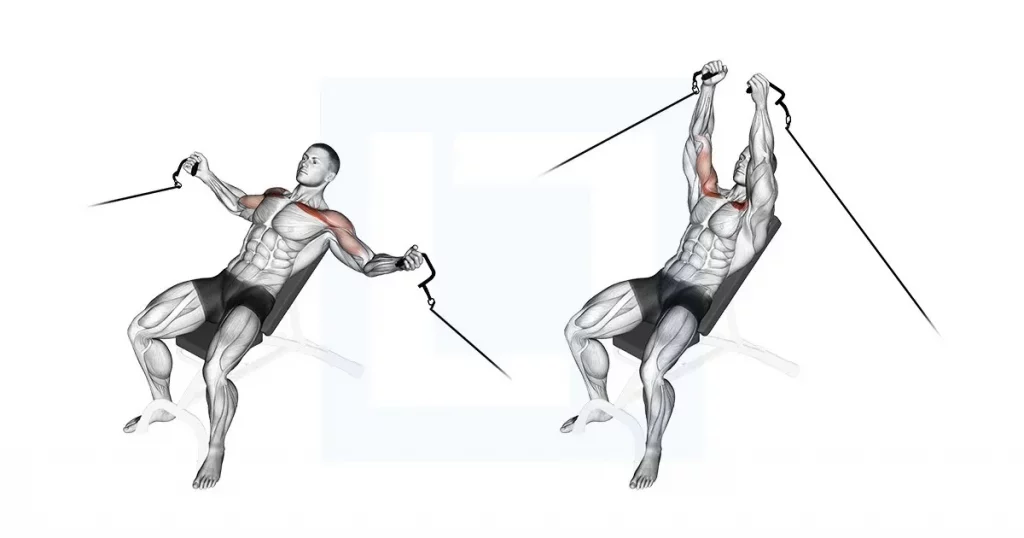
6. Incline Cable Flye
Targeted Muscles: upper pecs
How To:
- Set the bench to a 30–45 degree incline and place it between two low cable pulleys with D-handles attached.
- Sit on the bench, grasp the handles, and lie back with your arms extended above your chest and elbows slightly bent.
- Slowly lower the cables out to your sides in a wide arc until your elbows reach shoulder level.
- Keep the slight bend in your elbows throughout the movement.
- Contract your chest muscles to bring the handles back together above your chest.
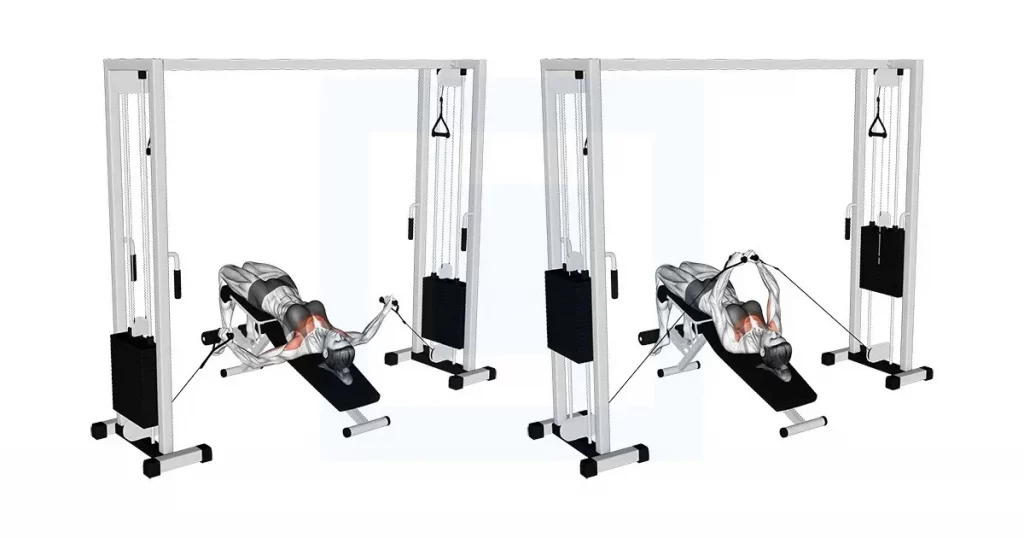
7. Decline Cable Flye
Targeted Muscles: upper pecs.
How To:
- Set a decline bench in the middle of a cable station and attach D-handles to the low pulleys.
- Lie back on the bench, grasp the handles, and extend your arms above your chest with a slight bend in your elbows.
- Slowly lower the cables out and down in a wide arc until you feel a stretch in your lower chest.
- Keep the slight bend in your elbows throughout the movement.
- Contract your pecs to bring the handles back together above your chest.
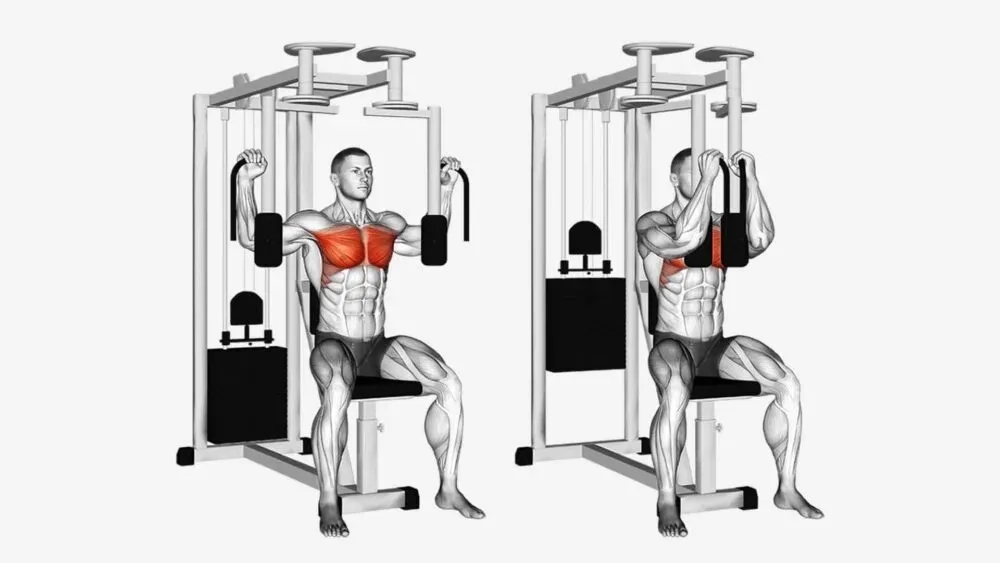
8. Butterfly Machine (Pec Deck)
Targeted Muscles: middle pecs, inner pecs
How To:
- Sit on the pec deck machine with your back flat against the pad and your feet firmly on the floor.
- Adjust the handles so that your elbows are slightly bent and your upper arms are parallel to the floor.
- Grasp the handles and slowly bring your arms together in front of your chest, focusing on contracting your pecs.
- Pause briefly at the peak of the movement to squeeze your chest.
- Return the handles slowly to the starting position with control.
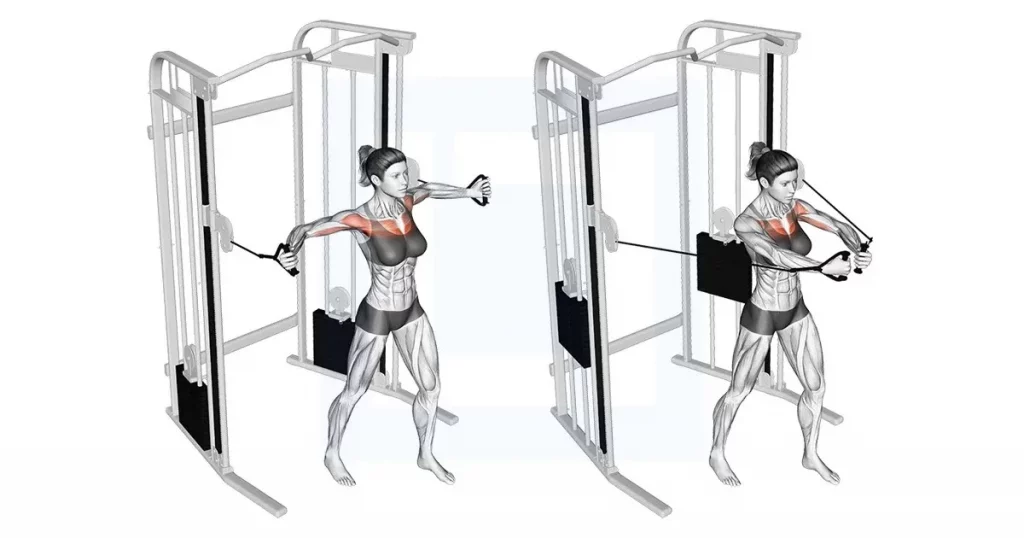
9. Cable Iron Cross
Targeted Muscles: inner pecs, lower pecs
How To:
- Stand in the middle of a cable station with the pulleys set at shoulder height.
- Grasp the D-handles and step forward slightly, keeping a staggered stance with a slight bend in your knees.
- With your elbows slightly bent, pull the handles down and across your body in a controlled arc until they meet in front of your hips.
- Squeeze your chest at the bottom of the movement for a brief pause.
- Slowly let the cables return to the starting position without touching the weight stacks.
Upper Chest Workout Routines for Men
The possibilities for chest day exercises are endless, but you probably don’t want to spend your Monday doing them all. Developing a muscular upper chest can be difficult, so we’ve compared the best chest isolation exercises to help you.
The goal of chest isolation exercises for advanced bodybuilders is to target muscles that are not being worked to their full potential. Mainly when performed in supersets, upper chest isolation exercises can help build more definition in areas that are often missed by compound movements. These isolation exercises can work well for men:
- Incline Dumbbell Flye
- Incline Cable Flye
- Low Cable Crossover
- Single-Arm Cable Flye (incline variation)
- Machine Incline Chest Fly
Upper Chest Workout at Home for Women
According to fitness experts, keeping our posture and balancing our upper body depends on the pectoral muscles. Good posture facilitates digestion, breathing, and blood circulation. A toned chest will also increase the strength of your shoulders and arms, so you’ll be able to pick up groceries and carry your baby more easily. Exercise not only works our upper chests but also our backs, shoulders, and arms. Try these chest isolation exercises at home:
- Lying Chest Fly (on a mat or with a stability ball)
- Chest Squeeze (using a dumbbell or a small exercise ball)
- Resistance Band Arm Pulses
- Incline Dumbbell Fly on a Stability Ball
- Resistance Band Low to High Fly (for the upper chest)
Final Words
This was a list of the best chest isolation exercises to include in your chest day calendar. These movements help you build muscle definition, correct imbalances, and strengthen your chest with more precision. By focusing on isolated chest exercises, you can target areas that often get overlooked and create a balanced, well-developed upper body.
Always remember to prioritize proper form and listen to your body. Stop immediately if you feel pain, and consult a physician or physical therapist if needed. With consistency and the right guidance from online strength training coaches, chest isolation workouts can play an essential role in achieving your fitness goals.
💬 If you found these chest exercises helpful, share your thoughts or questions in the comments below.
