
Virtual Personal Training can change everything when gym anxiety makes even the idea of stepping into a fitness center feel heavy. Many people have that moment when their heart speeds up before they even reach the door. They imagine crowded rooms, unfamiliar machines, wandering eyes, and the fear of being judged. This feeling is real. It is common. And it can quietly stop you from starting, even when you truly want to feel stronger and healthier.
What most people never realize is that you can begin without facing any of that pressure. You can start in a space where you feel calm and fully in control. No noise. No rush. No strangers watching. This is where online personal training becomes a completely different experience.
Training at home removes the tension and replaces it with privacy, steady guidance, and a coach who actually pays attention to you. Someone who understands your pace and helps you build confidence step by step. For anyone dealing with gym anxiety, this is not just an alternative. It is a gentler path that makes starting feel possible and continuing feel natural.
Understanding Gym Anxiety
Feeling uneasy or overwhelmed in a gym setting is more common than people realize. Many avoid stepping into the gym not only because the machines feel unfamiliar but because the whole environment feels crowded, noisy, and full of pressure. The worry of being watched or judged can make even the simplest workout feel tense. This reaction is real and shared by many, no matter their fitness level.
But what exactly causes this anxiety, and why is it so common?
Why Gym Anxiety Is So Common
Before we talk about how to overcome it, it helps to understand why gym anxiety shows up in the first place. This feeling is real, and you are not imagining anything. People of all ages and fitness levels deal with it, even the ones who look confident on the outside.
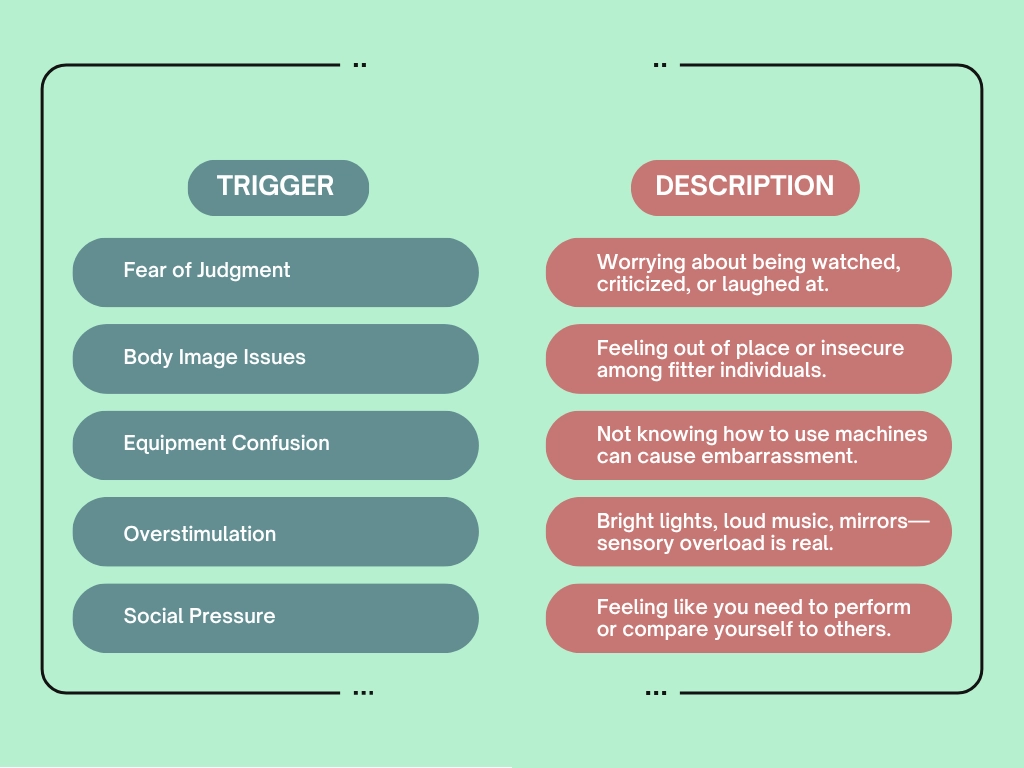
Even people who look confident in the gym can feel gym anxiety, so it makes sense if you have felt it too. The pressure to do everything “right” or to look a certain way can sit heavily on your mind and turn a simple workout into something stressful.
Research from the University of Rochester Medical Center explains that when you shift your focus to the process instead of the outcome, that feeling eases and the whole experience becomes more manageable. A lot of this anxiety comes from worrying about how others see your body, and that worry can create stress, shame, or even make you skip workouts altogether.
Why Virtual Personal Training Is a Game Changer
Anxiety at the gym can feel like a heavy backpack you carry into every fitness setting. Virtual Personal Training helps you set that weight down. No crowded rooms or wandering eyes. It is just you, your coach, and your pace. A quieter and more private way to move forward, especially if gym anxiety has been holding you back. If you want to see how the whole process actually works, our guide on how online personal training works explains it step by step.
1. You’re in Control of Your Environment
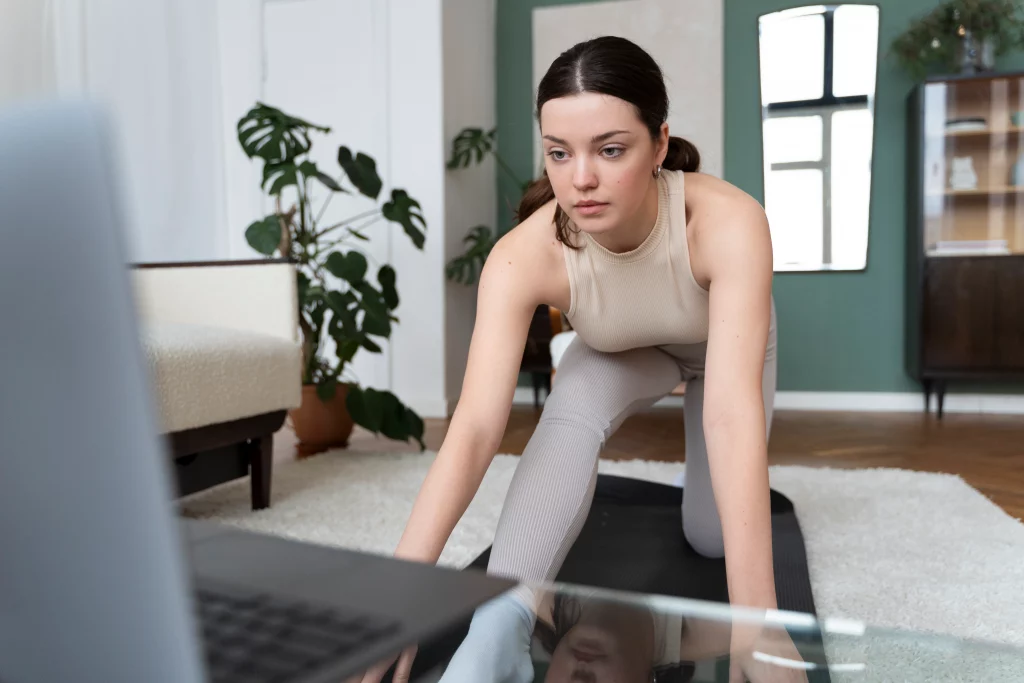
Your space. Your pace. Your rules. You do not have to wait for machines or squeeze into a crowded class anymore. Virtual training lets you create a setup that actually feels good for you, whether you roll out a yoga mat in your bedroom or exercise in your backyard with a set of bands.
And it is not only about feeling comfortable. Training in a familiar space makes it easier to stay consistent because your mind feels safer and less distracted. When your environment feels calm, your focus naturally shifts to effort instead of worry. The PhysioPedia article on home-based exercise explains how convenience, autonomy, and comfort play a big role in sticking with virtual fitness routines.
2. All Eyes on You In a Good Way
During an online session, the only person watching you is your trainer, and their whole job is to support you. If you have ever worried about stares or comments in the gym, this is where online personal training makes a big difference. You get focused attention in a space that feels safe and judgment-free. Unlike group classes, where you can get lost in the crowd, virtual training gives you one-on-one time that is completely centered on your progress.
3. More Than Just Workouts
A good trainer does more than tell you how to move. They pay attention to how you feel and support your mindset along the way. Many virtual coaches check in between sessions through quick messages or app reminders, and they celebrate the small wins that matter. Maybe it is your first full push-up or simply showing up on a tough day. This kind of steady encouragement builds trust and emotional strength, which makes anxiety at the gym much easier to manage over time.
An online fitness program is not only about physical results. It also strengthens your sense of control and emotional safety. Many people choose virtual training because it replaces the pressure of crowded spaces with focused, one-on-one guidance that feels calmer and more predictable.
- Stronger self-worth: Reaching small goals, like finishing a workout or staying consistent, builds real confidence and reduces the fear of being judged.
- Emotional safety: Training in your own space lowers the social pressure that often fuels anxiety at the gym.
- Steady accountability: Regular check-ins create structure without the intensity or overstimulation of a busy gym setting.
- Real human connection: Even online, virtual sessions offer meaningful support through feedback and encouragement instead of comparison and competition.
According to the Canadian Mental Health Association, physical activity can help reduce anxiety and depression. With virtual training, you can access those benefits even more easily because you can do it from the comfort of your own home.
How to Identify a Good Virtual Personal Trainer
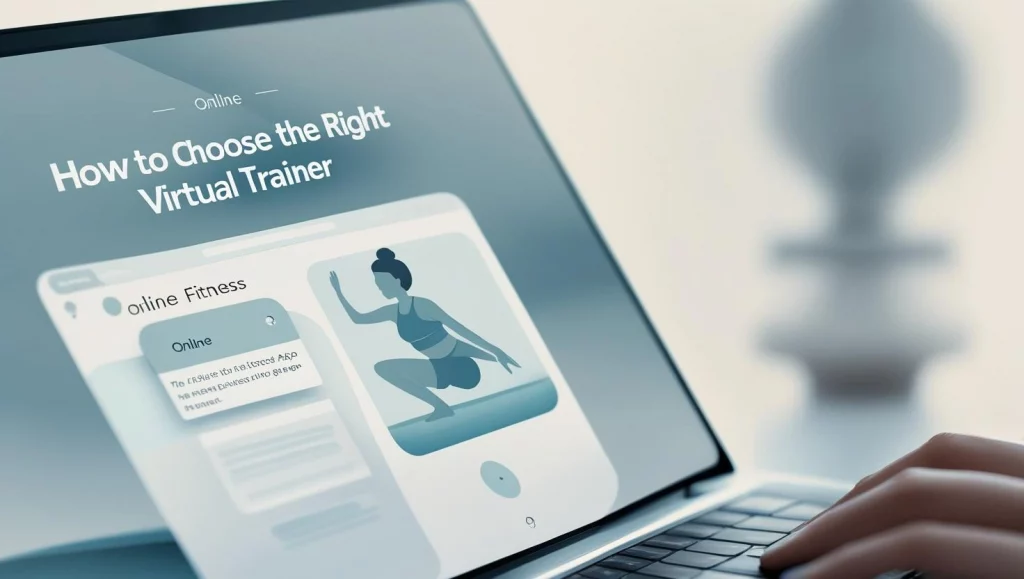
Finding the right online fitness trainer can shape your whole experience, especially if the gym has never felt comfortable for you. You are not just looking for someone who tells you how to exercise. You want a coach who understands you and makes you feel supported. Here is how to find the right match and avoid the usual mistakes.
To make that choice easier, here are five simple steps to help you find the right match and avoid common mistakes.
1. Where to Find Trustworthy Virtual Trainers
Not sure where to start? You are not alone. Many people begin by searching on Google, checking Google Maps listings, browsing Instagram profiles, or asking for recommendations from friends. These can help you discover trainers and get a sense of their style and experience.
However, it becomes much easier to compare coaches when you can see availability, communication style, coaching focus, and pricing in one place.
If you prefer a platform that brings all of that together, HappyTrainers is one option to explore. Being able to review trainer profiles side by side can make the selection process feel clearer and more comfortable.
2. Look for Credible Certifications
Anyone can call themselves a fitness coach, but that does not always mean they are certified. Look for virtual trainers who hold credentials from trusted organizations such as NASM, ACE, ISSA, or NSCA.
3. Communication Style Matters
Do they explain things in a way that makes sense? Do they sound supportive? Do they feel like a real person instead of a robot? It helps to schedule a free consultation or even exchange a few messages before you decide. You want someone who:
- listens without judgment
- asks thoughtful questions about your goals and comfort level
- keeps things simple and avoids confusing jargon
- gives feedback in a way that motivates you, not discourages you
If their energy does not feel right, trust your gut. The connection matters more than anything written on a resume.
4. Ask the Right Questions Before You Sign Up
Here is a simple checklist of questions to ask:
Q: What does a typical session look like?
A clear and beginner-friendly structure
Q: Do you offer camera-off options or flexible formats?
A willingness to support your comfort level
Q: How do you track progress?
Use of apps, regular check-ins, and goal tracking
Q: What if I miss a session?
A fair and reasonable cancellation policy
Q: Can you adapt workouts to low equipment spaces?
Creativity and flexibility in programming
A good trainer will not be bothered by these questions. They will actually appreciate them because it shows you care about finding the right fit.
5. Red Flags to Avoid
Watch out for trainers who:
- Offer the same cookie-cutter program to everyone
- Ignore your input or come across as impatient
- Never ask about injuries, mental health, or your past experience
- Focus only on looks instead of your overall well-being
- Respond late or cancel sessions often
If you do not feel respected, supported, and safe during your sessions, that trainer is not the right fit for you.
Benefits of Online Personal Training Beyond Anxiety Relief
Reducing anxiety at the gym is often the starting point. But virtual personal training does more than remove discomfort. It changes the structure around how you train, which directly affects consistency, progress, and long-term results.
1. Lower Friction Means Higher Consistency
One of the biggest hidden triggers of gym anxiety is friction. The commute. The crowded space. The mental preparation before walking into a room full of strangers.
Online personal training removes many of these barriers. When the session happens in your own space, you eliminate travel time, environmental stress, and social comparison triggers. Less friction means fewer skipped workouts. And fewer skipped workouts mean momentum.
For people dealing with anxiety at the gym, reducing friction can be the difference between repeatedly restarting and finally building consistent momentum.
2. Environment Shapes Behavior
Behavioral science shows that environment influences habit formation. When your workout exists inside your daily space, it becomes part of your routine rather than a separate event that requires emotional energy.
For someone struggling with gym anxiety, the traditional gym environment can act as a psychological stressor. Virtual personal training flips that dynamic. Your home becomes a controlled, predictable space. That sense of control strengthens adherence.
Over time, the association shifts. Exercise stops being linked to anxiety and starts being linked to familiarity and progress.
3. Reduced Social Comparison
A major driver of gym anxiety is comparison. Other people’s bodies. Other people’s strength. Other people’s confidence. In an online session, the focus narrows. It’s you and your coach. No mirrors filled with strangers. No subtle pressure to perform.
This doesn’t just reduce anxiety in the moment. It lowers the long-term risk of quitting due to discouragement. Many people don’t stop training because of physical difficulty. They stop because of emotional fatigue. Virtual personal training reduces that emotional drain.
4. Sustainable Progress Without Burnout
When people push through gym anxiety by forcing themselves into uncomfortable environments, they often rely on willpower alone. Willpower works temporarily. It rarely works sustainably.
Online personal training creates a system that doesn’t depend on constant emotional resistance. You’re not battling the room before you even start the workout.
That energy can now go toward skill development, strength building, and gradual progression. Over months, this difference compounds. What began as a solution for gym anxiety becomes a sustainable fitness structure.
Final Thoughts
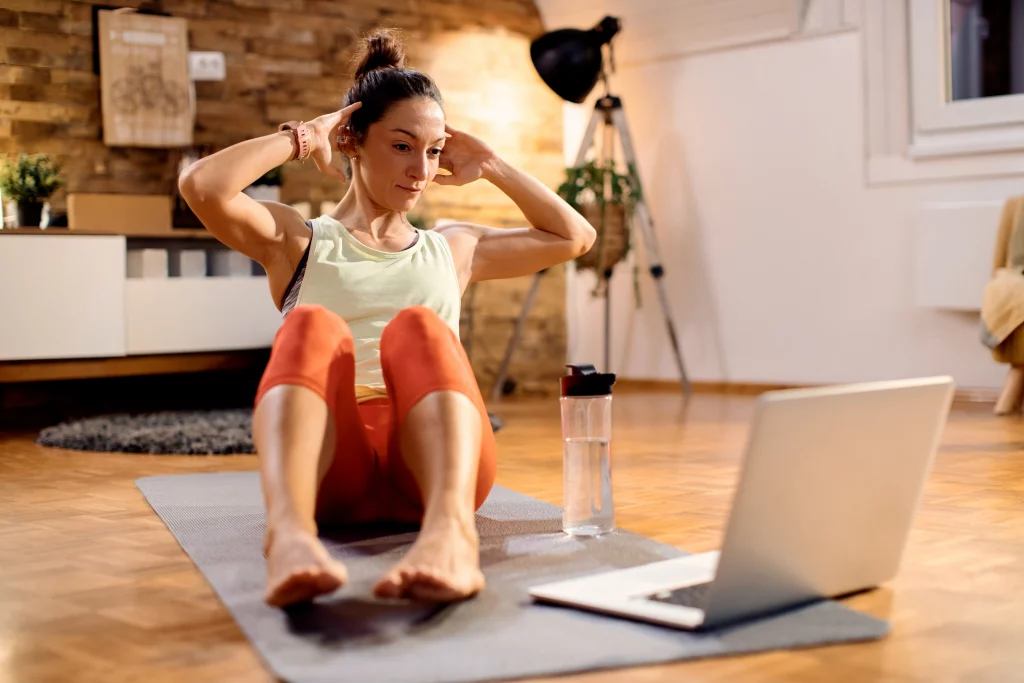
Gym anxiety should not hold you back from feeling stronger, healthier, and more confident. Virtual personal training offers a structured alternative that replaces pressure with predictability and fear with gradual progress. You choose the space, the pace, and the level of comfort, while a coach helps you move forward step by step.
When your environment feels safe, consistency becomes easier. And consistency is what ultimately builds real change. If anxiety at the gym has made traditional training feel overwhelming, you can start differently.
At HappyTrainers, you can explore certified virtual coaches, compare their coaching styles, and book a free consultation before committing. Finding the right fit can turn a stressful experience into one that feels.
Sources
- Adherence to Home Exercise Programs — PhysioPedia
- How to Overcome Gym Anxiety (2025) — University of Rochester Medical Center
- The Mood-Boosting Benefits of Getting Active — Canadian Mental Health Association
