

Learning how to gain muscle in women is often more confusing than most people expect because progress rarely looks obvious in the beginning. You might be training consistently while quietly worrying about gaining fat, or wondering whether all that effort is actually turning into visible change.
The tricky part is that progress often shows up in ways you feel before you can fully see it. Your strength improves. Movements feel more stable. Workouts become easier to control. Female muscle gain can be quieter than social media makes it seem, so many women mistake slow progress for failure.
This guide explains what realistic muscle gain actually looks and feels like, why visible results can take time, and whether building muscle for women can realistically start at home. At Happy Trainers, we believe strength is not only about changing your body. For many women, getting stronger is also part of learning to trust your body again.
- Quick Answer: How Women Can Start Building Muscle
- What Building Muscle Really Means for Women
- Your Starting Point Changes How You Build Muscle
- Protein, Calories, and Eating Enough to Support Muscle Growth
- Can You Gain Muscle at Home as a Woman?
- Final Thoughts: Real Muscle Gain Is Built, Not Rushed
- Sources
- FAQ
Quick Answer: How Women Can Start Building Muscle
If muscle gain feels confusing right now, start with the basics below. These factors usually make the biggest difference for women trying to build muscle.
| Muscle-Building Factor | Quick Target | Simple Direction |
| Strength training | Minimum 2 days/week | 3 days often works better for steady progress |
| 3-day structure | Full-body training | Full-body workouts, with more focus on upper body, lower body, then overall balance |
| Progressive overload | Gradual challenge | Add weight, reps, sets, control, or deeper movement over time |
| Protein | 0.7–1.0 g per lb of body weight per day (1.6–2.2 g per kg of body weight per day) | Aim for consistency, not perfection |
| If you are already lean | A small calorie surplus may help | Try 150 to 300 extra calories if progress is stuck |
| If fat loss is also a goal | No surplus may be needed at first | Maintenance or a small deficit can work |
| Time to notice changes | ~4–12+ weeks | Strength may improve before visible changes |
| Sleep | 7 to 9 hours/night | Recovery matters as much as training |
The recommendations above can be a helpful starting point, but muscle gain does not look exactly the same for every woman. Next, we’ll look at what may be supporting your progress and what may be holding it back.
What Building Muscle Really Means for Women
If you’re here, you probably want one of two things: to build muscle without looking bulky, or to gain more shape and size because it fits your goals.
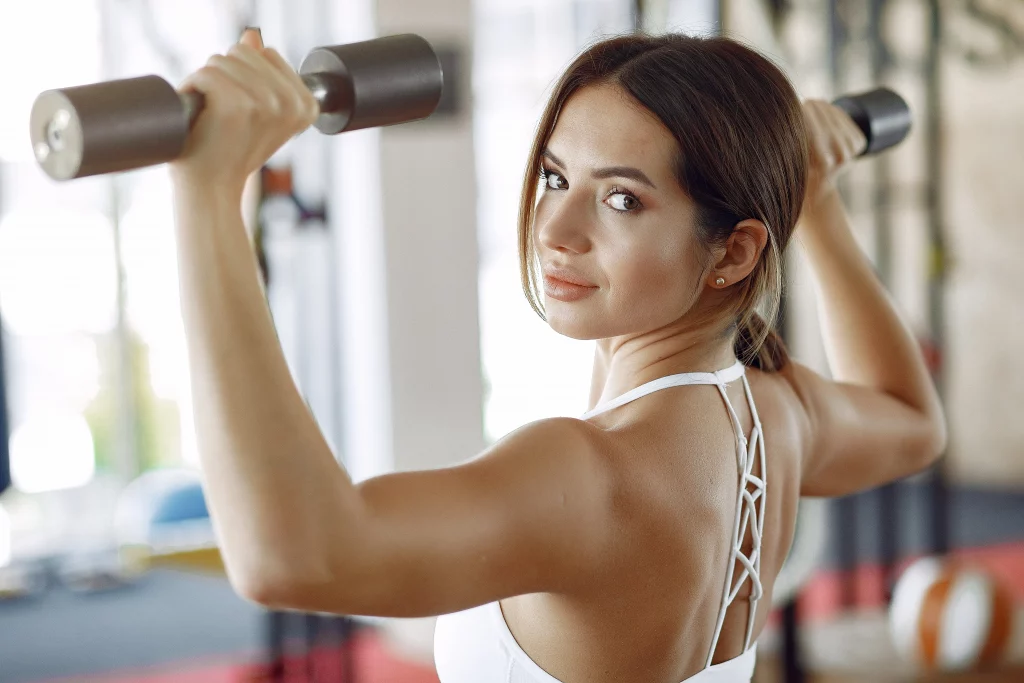
But strength training is not only about how your body looks. Harvard Health also points out that it can help support bone strength and long-term physical function. Even with those benefits, many women still worry that lifting weights will make them look too muscular. In reality, significant muscle growth takes years of consistent training, enough food, and a focused approach. For most women, learning how to build muscle is really about feeling stronger and looking more defined.
Muscle Growth Is Hypertrophy, but You Don’t Need to Overthink It
For women, muscle growth happens when your muscles are challenged enough to adapt over time. Once your workouts start feeling too comfortable, progress usually slows unless the challenge gradually increases. This is called hypertrophy. ACE describes it as muscle growth that happens when the muscle receives enough stimulus from training.
The good news is that progressive overload does not mean you need to lift extremely heavy weights right away. Small changes can still make a real difference. You can challenge your muscles by:
- Improving your exercise form and control
- Adding extra reps or sets over time
- Using a deeper range of motion
- Increasing the weight gradually
For example, if you start doing goblet squats with a 10 lb (≈5 kg) dumbbell for 10 reps, that weight may feel much easier after a few weeks of consistent training. At that point, you might increase the weight to 15 lb (≈7 kg), add a few reps, or use a different rep range while maintaining good form. You also do not need to push every set to complete failure. For many women, stopping when it feels like they could still do one to three more good-quality reps is often enough to support muscle growth.
Why Strength Training for Women Builds More Visible Muscle
Many women wonder which type of workout is most effective for muscle growth. Should you spend more time doing Pilates, TRX, aerobics, or strength training?
The answer usually comes down to how much your muscles are being challenged over time. If your goal is to build muscle as a woman and create more visible definition, strength training will usually get you there faster because it gives your muscles a more direct reason to grow than most other workout styles.
That does not mean other workouts are useless, though. They just improve the body in different ways:
| Workout Type | Best For | Muscle-Building Potential |
| Strength Training / Bodybuilding | Visible muscle growth and definition | Usually, the most effective for muscle growth |
| TRX | Core strength and body control | Harder to increase the challenge over time |
| Pilates and yoga | Flexibility, posture, and body control | Limited muscle-building stimulus |
| Aerobic Classes | Cardio fitness and endurance | Minimal impact on muscle growth |
| HIIT workouts | Cardio and resistance training | Can support muscle growth, but often less than strength training |
If you are completely new to exercise, almost any resistance-based workout can help you build some muscle in the beginning. But for women whose main goal is muscle gain, strength training should usually be the foundation of their routine. In practice, that often means exercises that train the major muscle groups, such as squats, deadlift variations, and pushing and pulling movements for the upper body.
Many women still combine strength training with Pilates, yoga, or walking. That can work well. Strength training is usually what drives muscle growth, while an activity like Pilates can help improve posture, mobility, and overall movement quality.
Your Starting Point Changes How You Build Muscle
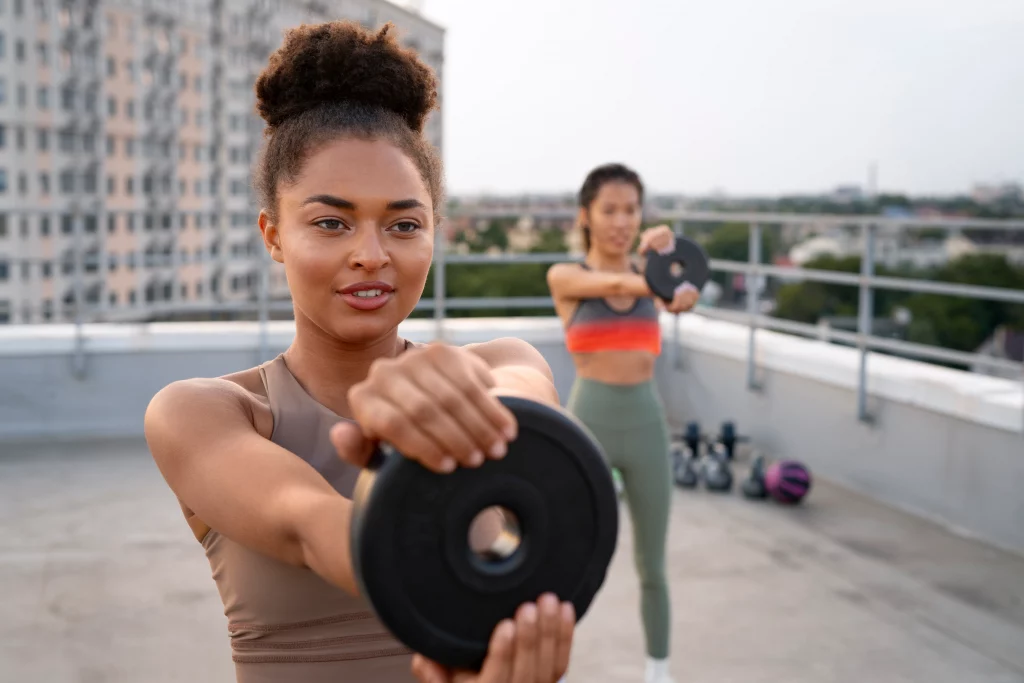
One reason muscle gain feels so confusing for women is that not everyone responds the same way to the same advice. The right approach usually depends on where you are starting from, how much you normally eat, and whether you want to build muscle, lose fat, or do both at the same time.
Those factors can also affect how quickly women gain muscle over time. If you are trying to lose body fat, recomposition may make more sense at first. If you are naturally thinner or struggle to eat enough, you may need a different approach that focuses more on nutrition and recovery.
If You Want to Lose Fat and Gain Muscle, Think Recomposition
If you are starting with more body fat, the process of gaining muscle as a woman may look a little different. In many cases, the goal is not just to build muscle. It is also about improving body composition through recomposition. During this phase, your body may gradually lose fat while maintaining or even building lean muscle mass.
That is why the scale may not change dramatically at first, even when real progress is happening. You may notice:
- Better strength during workouts
- More energy and stability during daily activities
- Changes in measurements, shape, or muscle definition
This is also why staying in a strict weight-loss mindset can sometimes work against you. Many women cut calories too aggressively while trying to build muscle, but your body still needs enough energy to recover properly, train well, and keep progressing.
If You’re Naturally Thin, Eating Enough May Matter More
Naturally thinner women sometimes notice muscle definition earlier because there is less body fat over the muscles. But gaining noticeable muscle can still feel frustrating if you are not eating enough consistently.
If you have a smaller appetite, a busy schedule, or a faster metabolism, nutrition may need just as much attention as training. A realistic meal plan for muscle gain can help you stay consistent with calories and protein, so you can support recovery without feeling like you have to force huge meals all day.
Recovery matters here, too. If your body is dealing with hard workouts, poor sleep, stress, and not enough food, it may struggle to build muscle consistently. In some cases, you may even look leaner without feeling noticeably stronger over time. Smoothies, Greek yogurt bowls, nut butter, olive oil, rice, eggs, and full-fat dairy can make eating enough feel less exhausting.
Protein, Calories, and Eating Enough to Support Muscle Growth
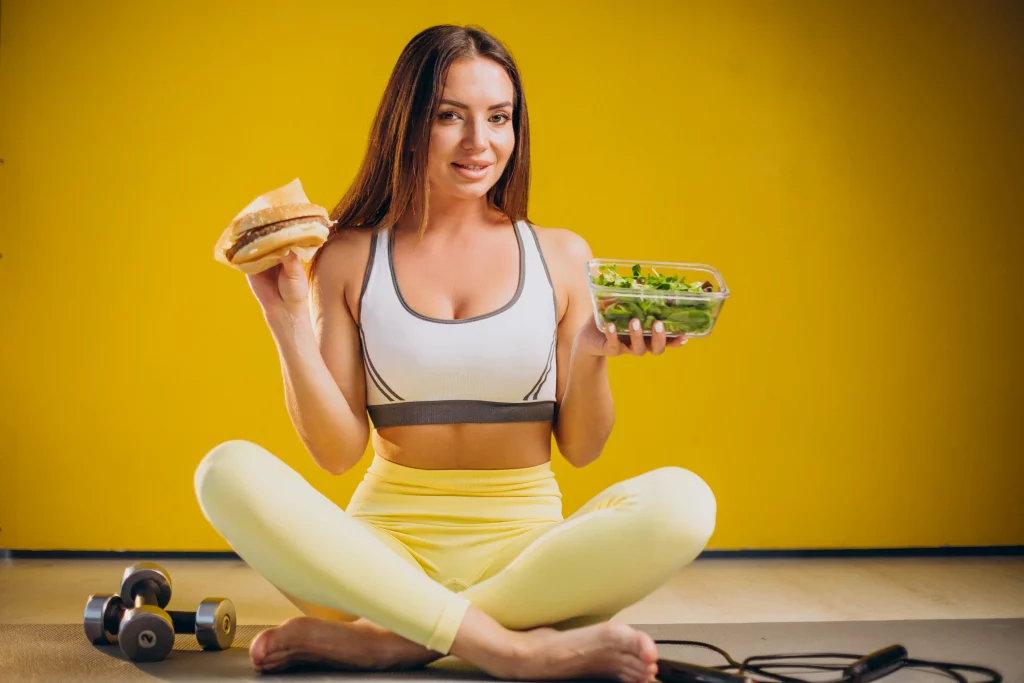
When women try to build muscle, the advice often sounds way too simple: “Eat more and train harder.” But many women may already be eating enough overall while still falling short on protein. Over time, that can make muscle growth and recovery much harder. To build muscle consistently, your body still needs enough calories, protein, and proper recovery.
How Much Protein Does a Woman Need to Gain Muscle
You may be wondering how much protein a woman needs to gain muscle. For general health, the minimum protein recommendation for most adults is around 0.36 g per lb of body weight per day (≈0.8 g per kg). However, women who are actively trying to gain muscle usually need more protein than the minimum recommendation.
For muscle growth, a range of roughly 0.73–1.0 g per lb of body weight per day (≈1.6–2.2 g per kg) is often a more useful target, depending on your training intensity and overall goals.
At the same time, there is no need to stress over hitting the exact number every single day. One concern that comes up often on Reddit and other fitness communities is whether missing a protein target for a day or two will hurt muscle growth. In practice, progress is usually built through consistency over weeks and months, not through perfect days of eating.
Building muscle is not just about protein. The table below highlights other nutrients and foods that can help support your progress.
| Nutrition Factor | Why It Matters | Common Food Sources |
| Protein | Supports muscle repair and hypertrophy | Chicken, eggs, Greek yogurt, cottage cheese, fish, tofu, lentils |
| Carbohydrates | Help fuel workouts and recovery | Rice, oats, fruit, potatoes, whole grain bread, pasta, quinoa |
| Healthy Fats | Support hormones, recovery, and help meals feel more satisfying | Nuts, nut butter, avocado, olive oil, salmon, seeds, eggs |
| Fiber | Supports digestion, gut health, and appetite regulation | Vegetables, berries, oats, beans, lentils, chia seeds, whole grains |
| Calorie-Dense Foods | The body needs enough total energy from food to support muscle growth | Peanut butter, granola, trail mix, dried fruit, olive oil, smoothies, full-fat dairy |
Overall health matters more than muscle growth alone, and consuming excessive amounts of protein does not automatically produce better results. That is also why fiber was included in the table. Fiber does not directly build muscle, but it plays an important role in digestion and overall health, and fiber deficiency is something many people overlook.
Whey Protein Helps, but It Is Not Magic
Now let’s talk about whey protein, because this is where fitness advice often starts getting confusing. If you are wondering about the best protein for women to gain muscle, whey can absolutely help. But it should not feel like your entire progress depends on it. Think of whey as a convenient way to fill protein gaps, not something that builds muscle by itself. It can make things easier when:
- Regular meals are not giving you enough protein
- Large meals feel hard to finish
- You want something quick after a workout
- A busy schedule makes consistent eating difficult
Some women may also need to be more careful with whey, especially if they deal with lactose intolerance, allergies, kidney conditions, or other medical concerns.
If low appetite is the problem, whey can be useful because liquid protein often feels easier than another full meal. But it is not your only option. Smoothies, chocolate milk, or other high-protein drinks can also work if they feel better for your body and fit your routine better.
Can You Gain Muscle at Home as a Woman?
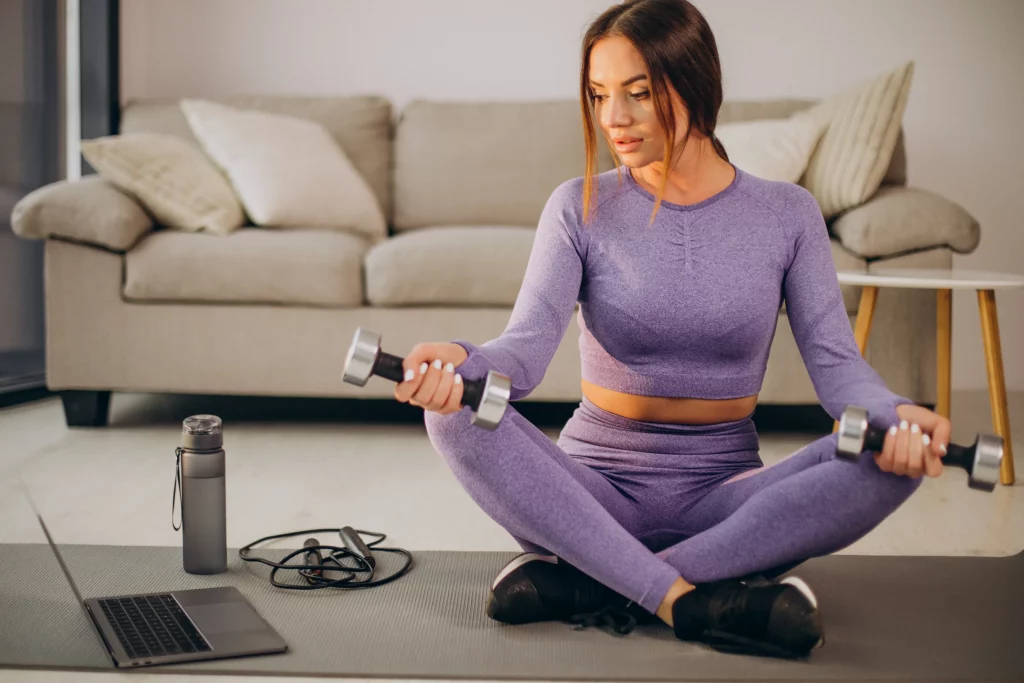
Home workouts can look simple for building muscle, especially when you compare them with gym machines and heavy weights. But if you are wondering, “Is it possible to gain muscle at home as a woman?” the real question is not only where you train. It is whether your workouts can keep challenging your muscles over time.
Let’s look at what home training can do well, where it can become limited, and how you can keep progressing without a gym membership.
Home Workouts Can Work If You Keep Progressing
Home workouts can be a great starting point, especially if the gym feels hard to fit into your routine. They give you a lower-pressure way to build consistency, practice form, and get used to strength training without feeling rushed.
If you are trying to figure out how to gain muscle at home as a woman, progression is what matters most. Your exercises still need to become more challenging over time. That can happen through better control, a deeper range of motion, added resistance, or equipment like dumbbells and resistance bands. Home strength training for women can build a strong foundation. But if your goal is bigger muscle growth, especially in the lower body, basic home workouts may eventually stop being enough.
A few signs your home workouts may need more structure include:
- The exercises feel too easy after a few weeks
- You are not increasing reps, resistance, or control
- You mostly do “fat-burning” moves instead of workouts that help women build muscle
- You are unsure whether your form is helping or holding you back
- You feel pain or discomfort and do not know how to adjust
This is where a structured plan can make a big difference. Working with an online fitness trainer can help you know when to increase the challenge, how to adjust exercises, and whether your form is actually supporting your muscle-gain goals.
When an Online Personal Trainer Can Help Women Build Muscle
Working with an online personal trainer does not mean you have to train only at home. An online coach can design your program for home workouts, gym training, or a combination of both. Many women start with home workouts first because the gym can feel intimidating in the beginning. But as strength and confidence improve, some eventually move into a gym to access heavier resistance and more equipment for muscle growth.
The good news is that online coaching can support both paths. Your online fitness coach can adjust your workouts based on your experience level, available equipment, goals, and starting point. That flexibility is one reason many women find virtual coaching easier to stick with long-term. It gives them more guidance without making the process feel overwhelming.
Another advantage is that you are not limited to whoever happens to live nearby. The best online personal trainer for you may have a completely different coaching style or specialty than the trainers available in your local area. We have prepared a list of online fitness trainers who work with women internationally, so you can explore coaches with different specialties, training styles, and approaches to muscle gain.
Final Thoughts: Real Muscle Gain Is Built, Not Rushed
Learning how to gain muscle in women is not about chasing the hardest workout, the strictest meal plan, or the fastest transformation. It is about understanding what your body needs next. For some women, that means focusing on recomposition first. For others, it may mean eating more consistently and gradually increasing training difficulty over time.
There may be moments when it feels like nothing is changing, especially if you are only looking at the scale or waiting for dramatic visual results. But muscle gain often shows up quietly before it becomes obvious. If a weight that once felt challenging now feels easier to lift and more controlled, that already counts as progress.
If you are not sure which path fits you best, start by asking one simple question: Does your current routine still challenge your body in a way you can recover from? Your answer can tell you whether you need more structure, better nutrition, heavier resistance, or simply more patience.
Sources
- Strength training builds more than muscles — Harvard Health
- How much protein do you need every day? — Harvard Health
- A Woman’s Guide to Gaining Muscle with Weight Training — ACE
- Research on resistance training and body recomposition in older women — PubMed
- How to Gain Muscle If You’re a Skinny Lady: The No-Nonsense Guide — Rise With Marcus
- 14 Best Muscle-Building Foods — GoodRx
- 26 Foods to Eat to Gain Muscle — healthline
- Research on dietary fiber and disease prevention — PubMed
- New insights and advances in body recomposition — Frontiers in Nutrition
- Community discussion about Pilates and muscle growth — Reddit
- Community discussion about daily protein intake for women — Reddit