

Compound chest exercises are one of the fastest ways to break out of a training plateau and feel stronger in every upper-body workout. Many people don’t realize how much progress they can unlock by switching from isolated movements to the best compound chest workouts that challenge the chest, shoulders, and triceps all at once. When your routine starts feeling repetitive or your results slow down, these multi-joint lifts usually make the biggest difference.
This guide keeps things simple. You’ll learn why compound lifts work so well, how to perform them safely, and how to build a weekly chest routine that actually drives growth, whether you train at home or in the gym.
What Are Compound Chest Exercises?
Compound chest workouts are movements that train several upper-body muscles at the same time. Instead of isolating the chest with a single-joint exercise, these lifts involve the shoulders, triceps, and stabilizers working together. Because more muscles are active, you can move heavier weights and make faster progress with less overall volume.
A classic example is the bench press. Your chest drives the movement, but your triceps lock out the bar, your shoulders guide the path, and your core keeps you stable on the bench. This is very different from isolation exercises like cable flyes, where the goal is to limit outside muscle involvement.
Common compound chest exercises include:
- Barbell bench press
- Incline and decline bench press
- Push-up variations
- Chest-focused dips
- Dumbbell bench press
If you want to see how these lifts compare to more isolated movements, you can explore the full breakdown in Compound vs Isolation Exercises. Once you understand what these exercises involve, the next question is simple: why should you build your chest routine around them? The benefits explain exactly that, so let’s walk through them.

Benefits of Compound Chest Workouts
Compound chest exercises make your workouts more effective. Instead of using small isolated moves, these lifts engage several upper-body muscles at once. Your chest works harder without needing extra sets. That’s why lifters of all levels use them as the foundation of their upper-body routines.
Here’s how these exercises help you progress faster and train with more confidence:
Improved strength and stability
When several upper-body muscles work together, you build strength that shows up in both your lifts and everyday movement. Heavier loads feel more controlled, and your pressing form becomes steadier over time.
Greater muscle activation and efficiency
Compound chest workouts recruit more total muscle fibers per set. This means better chest engagement, more growth potential, and less time spent doing long, repetitive routines.
Better functional performance and posture
Pressing patterns train shoulder stability and horizontal pushing strength. Over time, this improves your posture, reduces imbalances, and helps you feel stronger during daily tasks or sports.
How Different Angles Train Different Parts of Your Chest
Your chest responds differently depending on the angle you press from. Here’s the simple breakdown:
1. Upper Chest (Incline Work)
This area gives your chest a fuller look near the collarbone. Incline presses hit this zone the hardest, especially at 25–35 degrees, and a 2025 paper in the European Journal of Sport Science found that incline angles around 30–45° lead to the highest activation of the upper chest.
Best exercises:
Incline bench press, incline dumbbell press, incline push-ups.
When to focus here:
If your upper chest looks flat or you want more shape at the top.
2. Mid Chest (Flat Work)
This is your main strength zone. Flat presses activate the largest portion of the pecs and drive most of your size and power.
Best exercises:
Bench press, dumbbell bench press, and wide push-ups.
When to focus here:
If your chest lacks overall thickness or pressing strength.
3. Lower Chest (Decline Work)
Decline angles shift tension downward, helping with chest definition and a stronger lockout in pressing movements.
Best exercises:
Decline bench press, chest dips, decline push-ups.
When to focus here:
If you want a better lower-chest shape or stronger triceps-assisted pressing.
Top Compound Chest Exercises to Build Strength
Compound chest exercises help you lift heavier, activate more muscle fibers, and build strength that carries into every upper-body workout. Real lifters often say the same, sharing which movements helped them progress the most in this community discussion. Below are the key movements, explained simply with the cues that matter most.
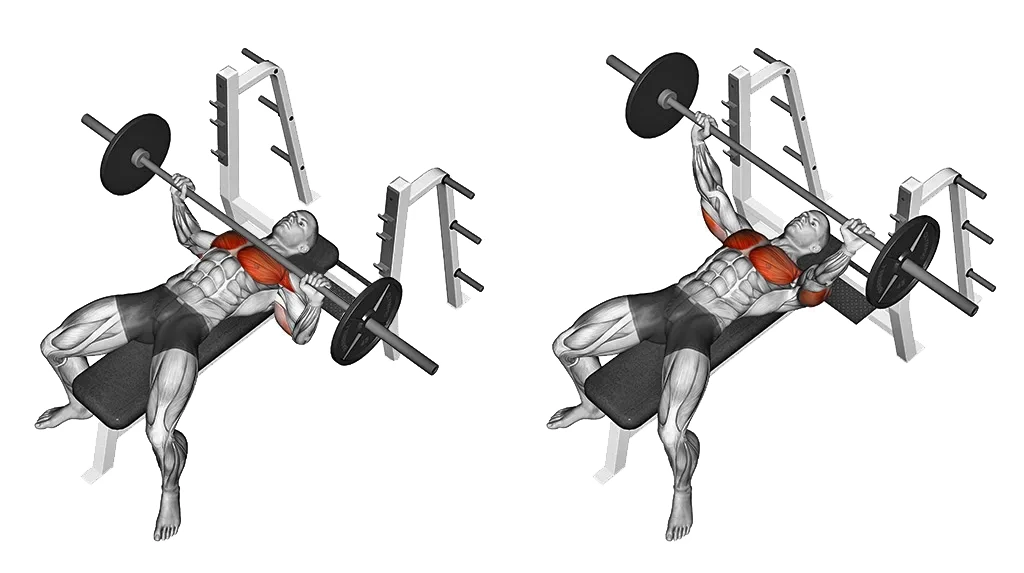
Barbell Bench Press
The bench press is the foundation of chest strength. It allows controlled, heavy pressing that trains the chest, shoulders, and triceps together.
Why it matters:
- Builds maximum pressing strength
- High chest and triceps activation
- Easy to progress safely over time
How to perform it well:
- Keep feet planted and shoulder blades pulled back
- Lower the bar smoothly
- Press in a controlled, steady line
Common mistakes:
- Flaring elbows too much
- Bouncing the bar
- Losing shoulder stability
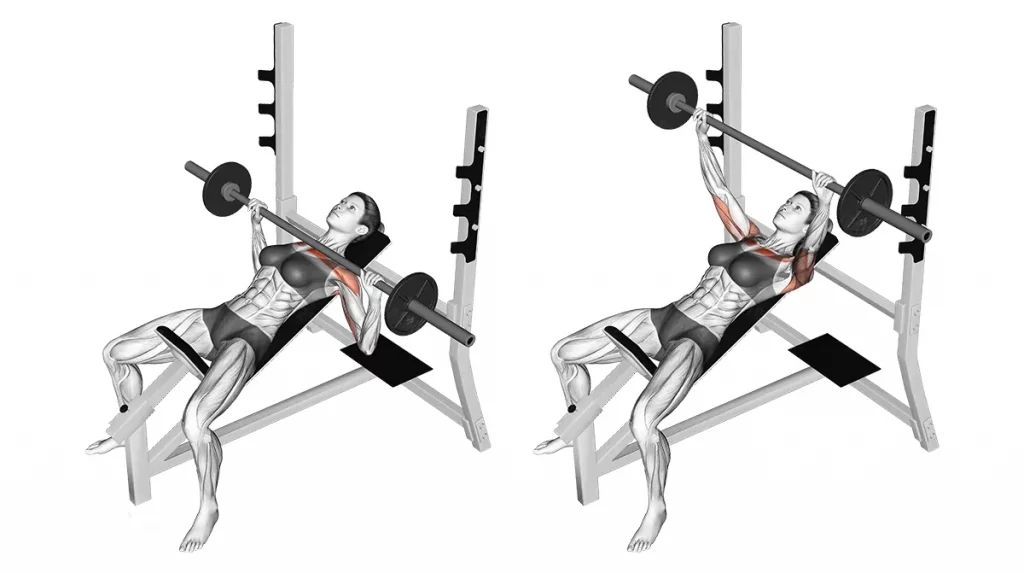
Incline Bench Press
Incline pressing shifts tension toward the upper chest, improving shape and fullness near the collarbone.
Why it matters:
- Best angle for upper-chest development
- Adds variety and balanced chest growth
How to perform it well:
- Set the bench to 25–35 degrees
- Lower the bar toward the upper chest
- Keep your chest lifted throughout
Common mistakes:
- Using too steep an angle
- Lifting hips off the bench when straining
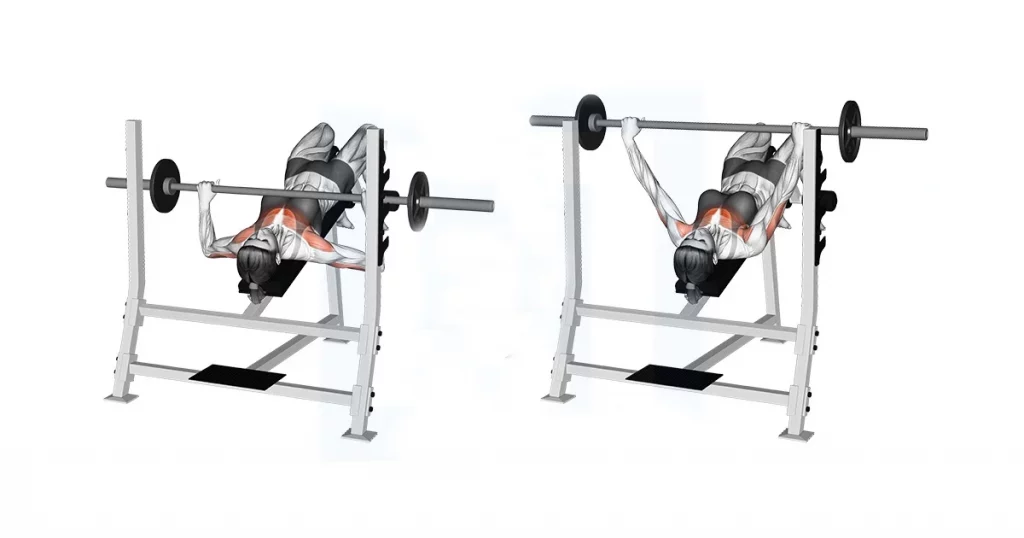
Decline Bench Press
Decline presses emphasize the lower chest and reduce shoulder stress, making pressing feel more comfortable for many lifters.
Why it matters:
- Strong lower-chest activation
- Often allows slightly heavier loads
- Shoulder-friendly variation
How to perform it well:
- Keep your core tight
- Control the bar on the way down
- Use a spotter when pressing heavy
Common mistakes:
- Dropping too fast
- Setting the decline too steep
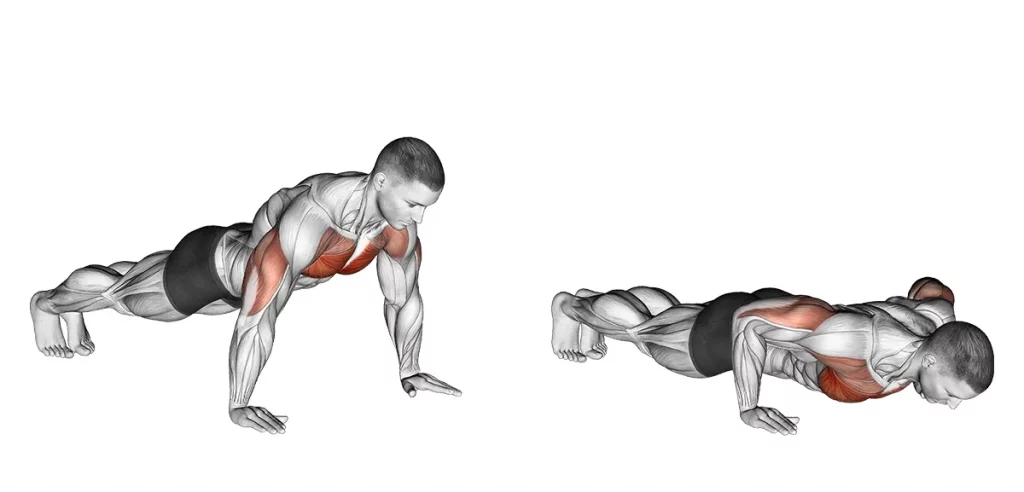
Push-Ups and Variations
Push-ups are accessible, joint-friendly, and easy to scale. With small adjustments, they can match the activation of many barbell presses.
Why they matter:
- Build chest, triceps, and core together
- Perfect for home or no-equipment training
How to perform them well:
- Keep your body in a straight line
- Lower with full range of motion
- Press through the palms, not just fingers
Common mistakes:
- Sagging hips
- Short, rushed reps
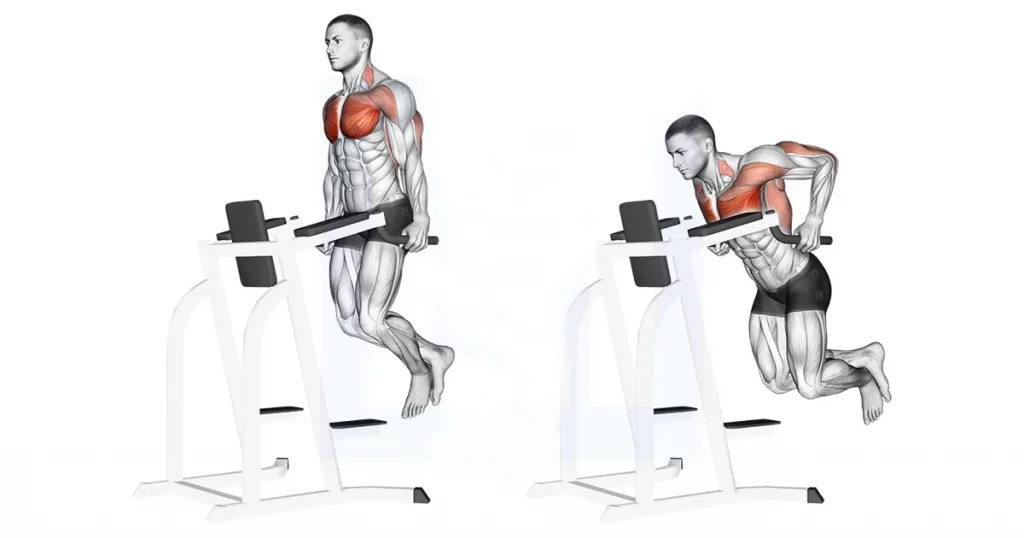
Chest Dips
Leaning slightly forward during dips shifts the emphasis toward the chest, especially the lower portion.
Why they matter:
- Excellent lower-chest builder
- Great for strength-to-bodyweight improvements
How to perform them well:
- Lean forward slightly
- Let elbows flare slightly (not like triceps dips)
- Keep movement smooth and controlled
Common mistakes:
- Staying too upright (turns into triceps-focused dip)
- Dropping too quickly and stressing the shoulders
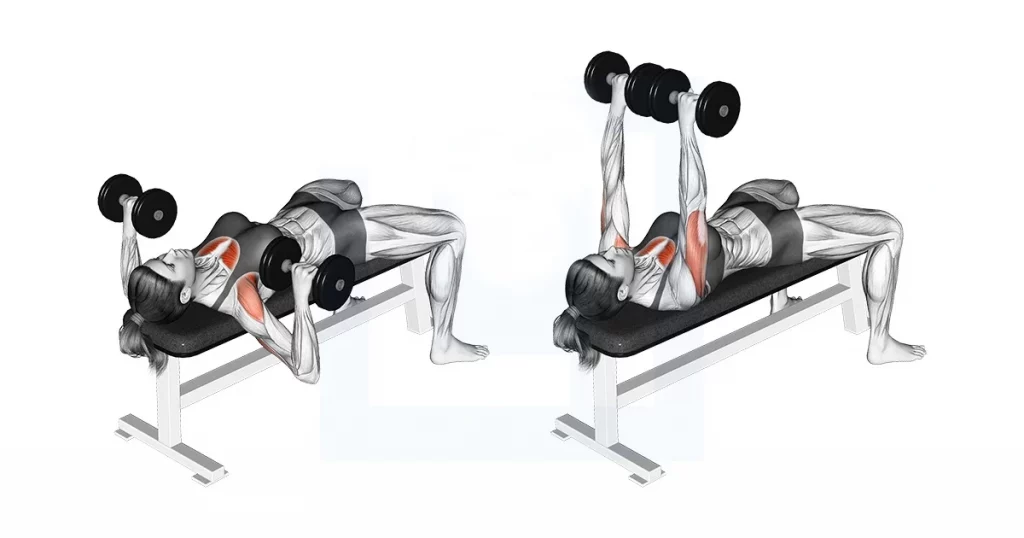
Dumbbell Bench Press
Dumbbells build strength while fixing left–right imbalances and increasing range of motion.
Why it matters:
- Greater stretch and activation than a barbell
- Helps correct imbalances
- Shoulder-friendly option
How to perform it well:
- Press in a slight natural arc
- Keep wrists neutral
- Control the weight at the bottom
Common mistakes:
- Dropping too low
- Uneven elbow paths
After mastering these, you can refine shape and symmetry with targeted work. Explore the 9 Best Chest Isolation Exercises.
Programming Compound Chest Exercises
Programming your chest workouts doesn’t need to be complicated. Most lifters get great results by training their chest twice per week and adjusting sets, reps, and rest based on their goal. Use the table below as a simple guide to structure your compound chest exercises effectively.
| Training Goal | Sets & Reps | Rest | What It Helps You Achieve |
| Strength | 4–6 reps × 4–5 sets | 2–3 min | More pressing power and heavier lifts |
| Hypertrophy | 8–12 reps × 3–4 sets | 60–90 sec | Muscle growth and fuller chest development |
| Endurance | 12–20 reps × 2–3 sets | 45–60 sec | Better stamina and high-volume push-up work |
If you want a program that’s built around proper progressive overload and tailored to your level, working with a qualified coach can make a big difference. Our online personal trainers design plans that match your goals, protect your form, and keep your progress steady.
Form, Safety, and Common Mistakes
Good technique is what makes compound chest exercises safe and effective. A few small adjustments can protect your shoulders and help you lift with more control.
Shoulder position
Keeping your shoulder blades slightly “back and down” gives your chest more power and reduces front-shoulder strain.
Quick cues:
- Imagine pinching your shoulder blades together
- Keep your chest lifted
- Avoid letting your shoulders roll forward
Tempo and breathing
Rushing reps usually leads to poor technique. A smooth rhythm makes every set safer.
Quick cues:
- Lower the weight slowly
- Inhale as you lower, exhale as you press
- No bouncing the bar off your chest
Set up and spotting
A good setup prevents most mistakes before the first rep.
Quick cues:
- Eyes under the bar when benching
- Check collars, safety pins, and bench stability
- Use a spotter for heavier sets
Final Words
Compound chest exercises don’t just build muscle. They help you feel stronger, more stable, and more in control of your training. Every clean rep and every small improvement becomes a reminder that progress is simple when you stay consistent.
These movements may look basic, but over time, they shape both your strength and your confidence. Even if you’re starting fresh, a steady routine can take you a long way.
If you want expert guidance along the way, an online personal trainer can help you refine your form and build a plan that fits your goals. Explore our certified online personal trainers anytime to find the right fit for you.
