
Online weight loss coaching is changing the way many people finally drop those stubborn pounds. But could a simple, generic diet plan still be a secret weapon? Imagine this: Next time stress hits, you won’t turn to comfort food because your plan already covers emotional eating.
In this post, you’ll explore how Pre-made diet plans and virtual weight loss coaches differ, the type of support each one offers, and how these approaches may impact your long-term health goals.
How Generic Diet Plans Work
If you want to manage your weight effectively, it helps to understand how general diet plans actually work—and where they fall short.
Inside a One-size-fits-all Diet
A Pre-made plan is a pre-designed eating guide created for individuals without specific health or dietary needs. You often find them for free on apps, websites, or wellness programs. These plans offer balanced portions of proteins, carbs, and healthy fats, encouraging you to eat a variety of foods from all the major groups to maintain good nutrition. They’re a way to get started with weight loss, especially if you don’t have access to personalized advice.
Why Your Body Fights Weight Loss
As Katherine Saunders explains in this TED Talk, many people following a fixed meal plan wonder why they’re eating ‘right’ but still not losing weight. The truth is, our bodies are hardwired to protect us, not to lose weight. In today’s world, free meal plans are easy to find—but so are oversized portions and high-calorie convenience foods. This constant exposure has created what doctors call an obesogenic environment.
Over time, a high-fat diet can even damage the hypothalamus, the part of the brain responsible for regulating hunger and metabolism. When this happens, it becomes harder for the body to recognize when it’s full. To make matters more challenging, factors like genetics, existing health issues, and limited access to healthy food options can further complicate the weight loss journey. That’s why generic diet plans often fall short—they don’t account for how your biology might fight back.
When following a diet plan to lose weight, many people are surprised to find that despite eating right and exercising, their body fights back. It slows down metabolism, stores more fat, and increases hunger hormones to protect itself. As a result, some individuals may notice their clothes fitting better even if the number on the scale barely moves. This common experience—losing inches but not weight—is explained in more detail in this article, shedding light on why progress can feel frustrating or confusing despite physical changes.
Why One-size-fits-all Diets Often Fail
- Lack of Flexibility
Generic plans don’t adapt to your metabolism, medical needs, or lifestyle. They offer rigid menus that ignore your schedule, mood, or food preferences, which makes them difficult to follow long-term. - No Personal Feedback or Accountability
Without expert guidance or regular check-ins, there’s no one to adjust the plan if you hit a plateau or face emotional setbacks. - Short-Term Mindset
Many fixed meal plans focus on cutting calories quickly instead of building habits. As a result, once the plan ends, people often return to old behaviors. - Overlooks Hormonal and Health-Specific Needs
These plans often ignore internal factors like stress, hormones, and medical conditions such as PCOS, diabetes, or thyroid disorders. As a result, they may fail to support both mental wellness and physical health.
In short, generic plans may seem simple, but they’re often too simple to meet your body’s real needs.
When a General Diet Plan Might Still Work
For some people, a general meal plan remains a practical weight loss option that encourages healthy habits, especially when personalized coaching isn’t available.
Suitable Candidates
A Pre-made meal plan can be surprisingly effective for healthy adults who don’t have specific dietary restrictions or medical concerns. It offers a balanced eating pattern that supports basic nutrition and overall well-being.
People with stable routines, such as regular sleep, low stress, and no urgent weight-loss goals, often find success with this approach. Sometimes, people just want some simple guidance, easy healthy swaps, or a free plan to follow alongside their own preferences. For them, a general diet plan for weight loss offers helpful structure without pressure.
Cost Considerations
For many people, choosing a generic meal plan is not only about convenience but also about affordability. Unlike personalized nutrition coaching or tailored diet programs—which often come at a higher cost—free or standard meal plans are widely available. They offer a cost-effective way to follow a structured eating routine.
Starting with a basic plan is a practical and affordable way to improve your diet and develop better nutrition habits without costly subscriptions. However, many weight loss coaches offer expert guidance at prices equal to or even lower than general diet plans, making them a smart and accessible choice for anyone seeking lasting results.

What does an Online Weight Loss coach do?
With a virtual weight loss trainer, you receive customized guidance, ongoing motivation, and professional support to help you stay on track. Unlike general weight loss plans, a virtual weight loss coach customizes strategies to fit your body, lifestyle, and preferences, helping make your weight loss journey more effective and sustainable.
Personalized Support and Real Results
According to a large study published by MDPI, participants who followed an interactive, personalized online weight loss program lost significantly more weight within 12 weeks compared to those using a non-interactive version. The findings suggest that structured digital coaching—with tailored feedback and behavioral tools—can effectively support short-term weight management. However, researchers noted that these benefits diminished over time, highlighting the need for ongoing support to maintain long-term results.
While short-term results were promising, researchers found the long-term impact to be more modest—especially in people of average weight. Since the program wasn’t designed for individuals with obesity, results were less dramatic than those seen in clinical settings.
For healthy adults seeking structured, affordable support, platforms like Happy Trainers and Elite Coaching offer one-on-one access to certified professionals who personalize your weight loss journey. Online coaching sessions on Happy Trainers start from just 5 CA$ per hour, making expert support more accessible than you might think.
Accountability and Motivation
One of the biggest reasons people abandon diet plans isn’t the food; it’s the lack of motivation and support. A pre-maid meal plan might tell you what to eat, but it won’t check in when your motivation dips or your routine gets off track. This is exactly where having a weight loss coach can truly change the game. Regular check-ins and encouraging messages provide accountability that helps people stick to their goals, even on tough days.
Virtual weight loss trainers don’t just track calories. They cheer you on, adapt your plan when needed, and keep you focused on long-term success. With someone in your corner, motivation becomes consistent and not just a Monday feeling. This kind of ongoing support can turn a temporary plan into a lasting lifestyle change.

Science-Based Benefits of Online Weight Loss Coaching
By blending customized meal and workout plans with regular check-ins and progress updates, online coaching keeps you motivated and on track, helping you achieve faster, lasting results.
Mental Resilience Through Coaching Support
Losing weight isn’t only about counting calories; it’s a challenge of mindset. Depression and chronic stress often trigger emotional eating, like raiding the fridge after a rough day alone. A virtual weight loss coach does more than plan meals; they become your accountability partner and emotional first responder.
Through regular video check-ins or messages, they can spot when you’re slipping into “sad snack” mode and offer quick, effective tools, like breathing exercises, mood-boosting walks, or swapping late-night snacks for a gratitude journal. By celebrating non-scale victories and helping you reframe setbacks, online coaching builds true mental resilience, turning moments of despair into stepping stones toward lasting success.
Building Lasting Habits, Not Temporary Fixes
Forming healthy routines takes more than a few weeks. Research shows most people require around 59 to 66 days to reach automaticity, and for many, it can stretch to 106 to 154 days. That’s why nearly 30–40% of people drop out of behavioral weight loss programs before finishing, and more than 80% regain the weight within five years.
A healthy diet plan for weight loss becomes sustainable when habit-building strategies like clear goal setting, consistent self-monitoring, and timely prompts are in place. That is exactly what the best online weight loss coaches provide: personalized milestones, regular progress reviews, and gentle reminders to reinforce your new behaviors. By weaving small changes, like prepping meals in advance or swapping a sugary snack for a piece of fruit, into your daily life, you’ll find that what once felt forced soon becomes second nature.
A Side‑by‑Side Comparison
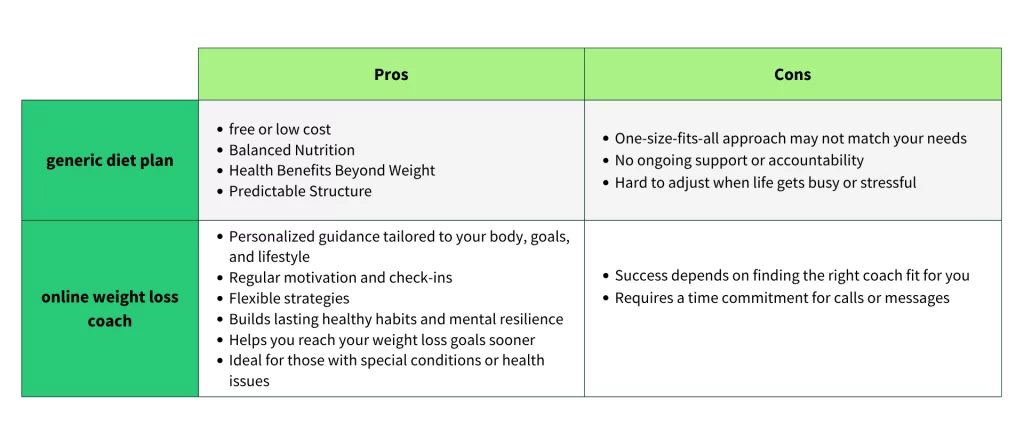
This comparison clearly shows that the strengths of online coaching far outweigh those of generic plans.
Conclusion
In today’s fast-paced, obesogenic world, a typical diet plan for weight loss isn’t enough. Long-term weight loss requires more than meals; it needs personalized support, structure, and strategy. That’s where online weight loss coaches shine. They provide tailored guidance and emotional accountability.
Now that we’ve played referee between diets and coaching, it’s your turn to step into the ring. With the right coach by your side, your goals become not just possible but truly achievable.
💬 Was your biggest win from a diet plan or from working with a coach? Or maybe your biggest struggle? Share your experience below—someone reading this right now needs your advice.
